

By: Dr. Maria Ofitserova

We didn’t want you to think that we only write about our Artificial Body Fluids, so we wanted to pass along an interesting study done utilizing the post-column derivatization method for Paralytic Shellfish Toxins (PSTs).
Alexandrium catenella is a species of dinoflagellates that produce Paralytic Shellfish Toxins that accumulate in bivalves and some fish. As ocean waters warm in the Alaskan Arctics, Harmful Algae Bloom (HAB) caused by rapid increase in population of Alexandrium catenella happens more and more frequently. Increase in neurotoxins contamination levels of shellfish poses considerable health risk to humans and animals, even causing mass mortality events in large marine mammals.
A study recently published in Harmful Algae journal was using data on paralytic shellfish toxins found in Alexandrium catenella and in shellfish to validate models of PSTs transfer in a critical Arctic food chain and calculate walruses’ toxins exposure during Alexandrium HAB events.
The study was using post-column derivatization method to determine concentrations of toxins in different matrices. Pickering Laboratories’ Onyx PCX derivatization system is ideal for this application and we also offer reagents and HPLC eluants to help laboratories who would like to save time on preparations of the solutions and take advantage of consistent batch to batch performance of consumables manufactures by our company. Application notes MA105 and MA105.1 (https://www.pickeringlabs.com/wp-content/uploads/2021/05/Paralytic-Shellfish-Toxins-MA105.pdf) describe post-column analysis of Paralytic Shellfish Toxins according to official AOAC 2011.02.
The study publication is available here:
https://www.sciencedirect.com/science/article/pii/S1568988325001623


 Pickering Laboratories would like to congratulate the winners for our previous newsletter’s Chromatography Quiz: Jeff Fan from Thermo Fisher Scientific, Thomas Schneider from SCWA, Narjes Ghafoori from Los Angeles County Public Health Laboratory, and Josiah Hakala from Minnesota Department of Health.


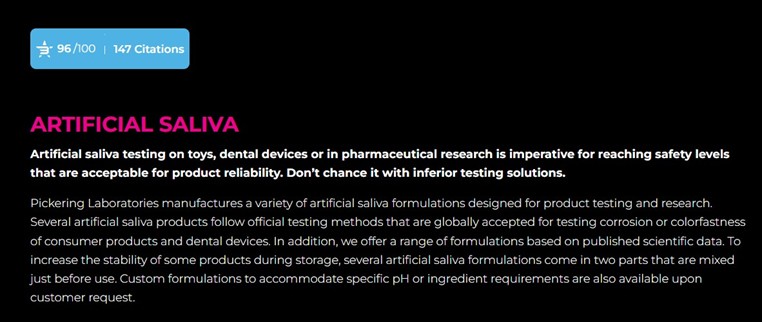
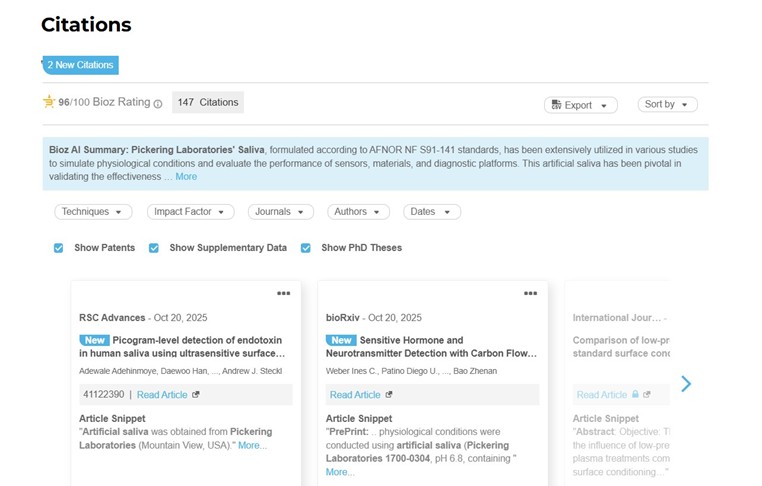
 At this show, we focused on our Product Testing Solutions (aka Artificial Body Fluids), which are used to test various consumer products for quality and safety. We learned a great deal about the growing Wearable Technologies market and subcategories of wearables such as “Hearables”, a hot topic due to the introduction of over-the-counter (OTC) hearing aids. It is clear that Wearables will continue to rapidly evolve and play an important role in the healthcare industry. This conference had the added advantage of being the very first show in over 40 years that was walking distance from Pickering’s HQ in Mountain View; hosted at the super cool Computer History Museum!