All posts by Pickering Laboratories

Introduction – Winter 2026 Newsletter

By: Kevin McKeown

After an exceptionally snowy last few months on the East Coast and a wet and rainy season on the West Coast, I bet you cannot wait: it’s time for the (late) Winter 2026 edition of the Pickering Laboratories newsletter, Retention Times!

In this issue, we’ll share fun staff news and celebrations while also mixing in our usual blend of product updates from both the Post-Column and PTS/Artificial Body Fluids product lines.

First, we kick things off with an announcement about our next exhibition at Analytica. We will be teaming up with our UK/EU PTS dealer, EssLab, and will be in Hall B1, Booth 333A. Come by and say hi to Rebecca, Kevin, and the EssLab team!

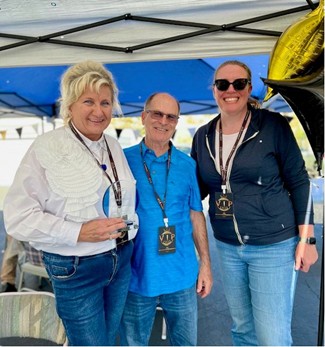
Next, we celebrate our dear colleague Maria’s 25th anniversary! Dr. Maria Ofitserova is a treasured member of our team, and many of you have had the opportunity to benefit from her vast wealth of knowledge on both Post-Column and Artificial Body Fluids topics and applications.

Speaking of Maria, she is introducing a new product: Fluorescamine. This new product is used in conjunction with a growing application area for Post-Column analysis—peptides. With GLP-1s all over the news, we wanted to join the action and provide our customers with another option for sourcing their method-specific consumables.

If you thought we’d make it through a newsletter without mentioning shellfish, I’m sorry to disappoint! In our PSP Landing Page, we showcase the newest resource added to our website. There you’ll be able to find method abstracts, brochures, and other helpful materials if you are—or are considering—getting your lab ready for PTOX testing. Spring is right around the corner, and the water will soon be heating up!

Finally, we highlight a paper in which our products were used for sweat cortisol monitoring. We’ve had a great time combing through our citations, but a recent one really stood out. The fact that it was published in Nature initially caught our attention, as it is such a prominent publication—but the study itself is fascinating, tackling a problem many of us experience: jet lag.

But wait, there’s more! We couldn’t publish a newsletter without our very popular Chromatography Quiz, so put on your thinking caps and see if you can figure out why David’s customer is experiencing a Valve Lost Error. Send in your answers for a chance to win a fabulous prize!
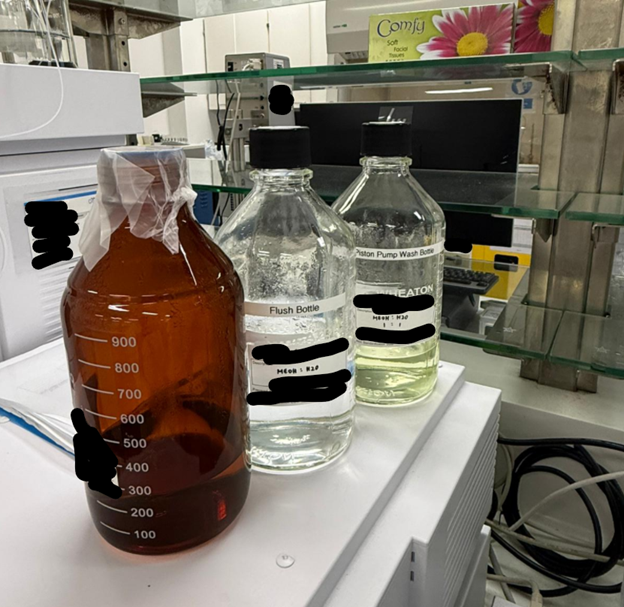

Quiz #47 – Piston Washed Out

Here we have a customer with a Pinnacle PCX and they are observing some discoloration in the piston wash solution. Under normal circumstances, the solution has no color and now the solution is yellowish and the piston wash volume continues to increase.

What could be causing this problem with the customers piston wash solution?

Submit your answers to rsmith@pickeringlabs.com by December 31, 2025!

Announcing the winners of our previous quiz, Chromatography Quiz #46 – Peaking at the wrong time

Pickering Laboratories would like to congratulate the winners for our previous newsletter’s Chromatography Quiz #46: Tom Schneider from SCWA, Josiah Hakala from Minnesota Department of Health, and Narjes Ghafoori from Los Angeles County Public Health Laboratory. 

Our winners will shortly be receiving: a $100 gift card from Amazon.com! 

Congratulations to our quiz winners!  Thank you all for your submissions!


Chromatography Quiz #46 Solution:

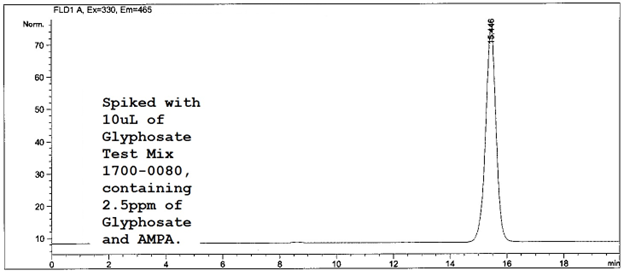
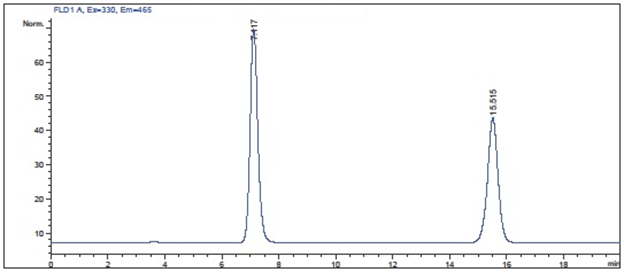
For reference, here is what we observed and also what a good chromatogram looks like:

Troubleshooting Chromatogram:

Reference Chromatogram:

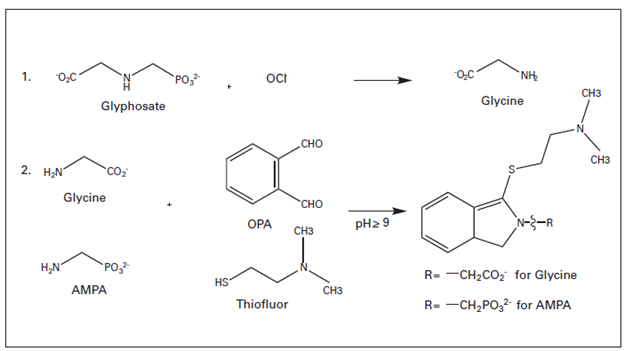
For this problem, we take a look at the chemical reaction taking place:

In the first stage, glyphosate is oxidized by hypochlorite to glycine. In the second stage, glycine reacts with o-phthalaldehyde and Thiofluor™ (a mercaptan) at pH 9–10 to produce a highly fluorescent isoindole. AMPA does not need the initial oxidation to react with OPA.

We observed only AMPA and are suspicious of the reagent 1 preparation or possible a physical problem with Pump 1. If there is a problem with the oxidizing reagent, there will be no Glyphosate signal. AMPA does not require oxidation to react with OPA.


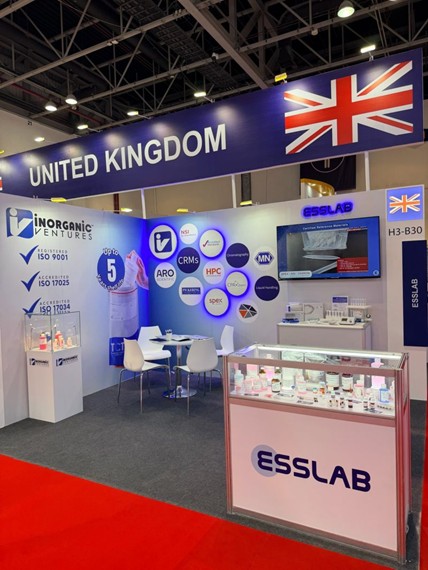
Esslab Attends ArabLab

By: Kevin McKeown

In a previous installment of our newsletter, we introduced our new Product Testing Solutions (PTS) aka Artificial Body Fluids dealer for the UK/EU: EssLab

Well, now EssLab has brought the Pickering Test Solutions product line to a new part of the world by featuring us on their booth at ArabLab!

There was a lot of interest in artificial body fluids and this served as the introduction of our products to a new audience of analysts.  ArabLab serves as a meeting point for laboratory equipment manufacturers, life-sciences firms, diagnostics, environmental monitoring, petrochemical testing, food/beverage analysis, and other segments.  This region of the world is making a significant investment in scientific infrastructure, regulatory standards and innovation in analytical/laboratory technology.  We are thrilled that we have a partner who can take our products to countries, and customers, that previously had no easy way of knowing who we are.

This should be a sneak preview of more joint work between Pickering Labs and EssLab.  You can look out for this dynamic duo to be teaming up at conferences throughout the UK/EU in the years to come… maybe even in Munich, Germany in a few short months!

Studying Paralytic Shellfish Toxins in the Pacific Walrus

By: Dr. Maria Ofitserova

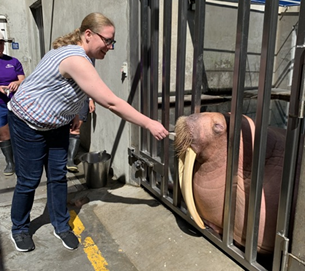
Rebecca Smith, President, pictured with her Walrus friend named “Garfield”!

We didn’t want you to think that we only write about our Artificial Body Fluids, so we wanted to pass along an interesting study done utilizing the post-column derivatization method for Paralytic Shellfish Toxins (PSTs).

Alexandrium catenella is a species of dinoflagellates that produce Paralytic Shellfish Toxins that accumulate in bivalves and some fish. As ocean waters warm in the Alaskan Arctics, Harmful Algae Bloom (HAB) caused by rapid increase in population of Alexandrium catenella happens more and more frequently.  Increase in neurotoxins contamination levels of shellfish poses considerable health risk to humans and animals, even causing mass mortality events in large marine mammals.

A study recently published in Harmful Algae journal was using data on paralytic shellfish toxins found in Alexandrium catenella and in shellfish to validate models of PSTs transfer in a critical Arctic food chain and calculate walruses’ toxins exposure during Alexandrium HAB events.

The study was using post-column derivatization method to determine concentrations of toxins in different matrices. Pickering Laboratories’ Onyx PCX derivatization system is ideal for this application and we also offer reagents and HPLC eluants to help laboratories who would like to save time on preparations of the solutions and take advantage of consistent batch to batch performance of consumables manufactures by our company. Application notes MA105 and MA105.1 (https://www.pickeringlabs.com/wp-content/uploads/2021/05/Paralytic-Shellfish-Toxins-MA105.pdf) describe post-column analysis of Paralytic Shellfish Toxins according to official AOAC 2011.02.

The study publication is available here:

https://www.sciencedirect.com/science/article/pii/S1568988325001623

Celebrating 25 Years with Pickering Labs: Anita Gribaldo

By: Christopher Nguyen

This month, we’re proud to celebrate Anita Gribaldo’s 25th work anniversary at Pickering Laboratories!

As our Packaging Lead, Anita has spent a quarter century ensuring every product that leaves our doors meets the highest standards. Her exceptional attention to detail and commitment to quality have made her an indispensable part of our team.

Anita’s reliability, precision, and pride in her work — and in her Polish heritage — reflect the very best of Pickering Labs. We’re grateful for her dedication and the consistency she’s brought to every project over the years.

Congratulations, Anita, on this incredible milestone — and thank you for 25 years of excellence!

New Bioz Partnership for Pickering Labs!

By: Kevin McKeown

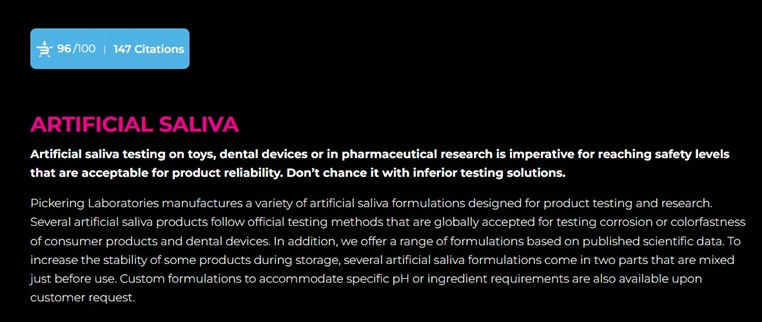
You may have seen that our websites: www.pickeringlabs.com and www.pickeringtestsolutions.com have gotten a VERY cool addition: Bioz badges


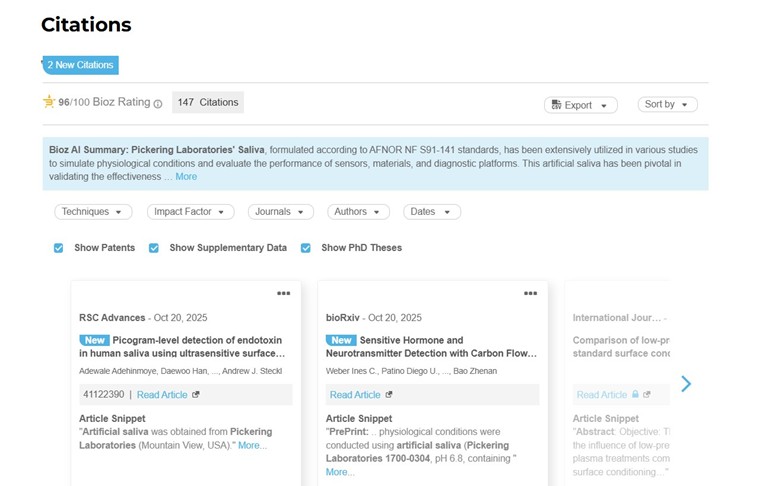
One of the most common questions that we receive from our customer is, “Can I use your artificial body fluids for ______ (insert your sample type or method of analysis!)?”  Previously, we would draw off anecdotal evidence that we may have collected over the years or, in most cases, hesitate to make any suggestions, as our customers know their samples WAY better than we ever could.  Now, we have an easy, searchable way for anyone to explore what our artificial body fluids have been used for. 

From Bioz’s website, here’s the explanation of their service:

Bioz operates a specialized AI-powered search engine designed for life science researchers in academia and the biopharma industry. They mine, analyze and structure huge volumes of scientific literature to provide

What this means for you, and us, is that there is now a way to explore the many ways that our products have been deployed.  Some of our favorites that we have found so far: Small-scale storable paper biobatteries activated via human bodily fluid, Cerumen/Earwax as a means of diagnostic testing, Lung Fluid for the testing of inhaled microplastics and the list goes on!

We encourage you to go hunting yourself and find out about all the different studies that we have been a part of!

Quiz

Quiz #46 – Peaking at the wrong time

In this Glyphosate chromatogram per EPA 547 (link to method abstract), you will see Only the metabolite AMPA eluting around 15 min. What is contributing to the loss of Glyphosate?

Submit your answers to rsmith@pickeringlabs.com by May 30, 2025.

Pickering Standard: 1700-0080 Glyphosate Test Mixture, 2.5 µg/mL, 10 µL injection

Pickering Column: 1954150 Cation-exchange Column for Glyphosate analysis, 4 x 150 mm

Normal Operating Conditions: (for reference only, condition changes may be reflected in chromatogram)

Column Temperature: 55 °C

Flow rate: 0.4 mL/min

Eluent Gradient:

TIME

K200

RG019

0

100

0

15

100

0

15.1

0

100

17

0

100

17.1

100

0

27

100

0

Post-column conditions:

Reagent 1: Oxidizing reagent – 100 uL of 5% Sodium Hypochlorite in 950 mL of GA116 

Reagent 2: 100 mg of OPA, 2 g Thiofluor™ in 950 mL of GA104

Reactor 1: 36 °C, 0.5 mL

Reactor 2: ambient. 0.1 mL

Reagent flow rates: 0.3 mL/min

Detection: Fluorometer ex 330 nm, em 465 nm

Troubleshooting Chromatogram:

Reference Chromatogram:

Announcing the winners of our previous quiz, Chromatography Quiz #45 – Amino Acids Rising Baseline

Pickering Laboratories would like to congratulate the winners for our previous newsletter’s Chromatography Quiz #45: Josiah Hakala from Minnesota Department of Health, Thomas Schneider from SCWA and Narjes Ghafoori from Los Angeles County Public Health Laboratory. 

Our winners will shortly be receiving: a remote-controlled drone, complete with 4k camera! 

Congratulations to our quiz winners!  Thank you all for your submissions!

Chromatography Quiz #45 Solution:

For this problem, we had to review the Onyx pump pressure trace.

We did find a loose tubing on the cap resulting in air being sucked into the pump. The air is initially pushed out at the beginning of the run. You can see the pressure coming up very slowly. Once the reagent is delivered properly, you have a good baseline.

Below you will find the pressure trace once the tubing was secured.

The method details can be found on our website (check out our amino acids brochure).