Pickering Laboratories
Menu
 
Menu

NIST/NIH Dietary Supplements Quality Assurance Program Workshop

By Wendy Rasmussen

Natural products industry is under increasing pressure to increase analytical testing of raw materials and finished products. This not only includes contaminants (such as heavy metals, pesticides, and mycotoxins), but also identification and nutrition labeling.

The DSHEA (Dietary Supplement Health & Education Act) created the Office of Dietary Supplements in 2002. The Dietary Supplement Quality Assurance Program, is a collaboration between the NIH’s ODS and the NIST. The program consists of Exercises in which several samples are sent out to participating labs throughout the year, and the results are then analyzed in a report. This is a completely voluntary exercise, and it gives a laboratory a great opportunity to check their results against a certified value and also against those of their peers. Even though participation is not part of a regulatory certification, the choice to participate greatly increases confidence and credibility.

And since the NIST are working closely with the NIH’s Office of Dietary Supplements, I asked the ODS if they could describe the relationship:

“The DSQAP is part of the ODS Analytical Methods and Reference Materials Program. We’ve been funding them to produce supplement matrix reference materials since about 2002. A few years ago, we discovered that NIST had QA programs for other commodities, and we thought that a dietary supplement program would complement the reference materials already being produced and added funding to the inter agency agreement we already had in place with them. While we are a funder for the NIST program, it could be described as more of a collaboration than a strict funding relationship. NIST pretty much matches our funding with internal funding. “

The NIST website http://www.nist.gov/mml/analytical/dsqaprogram.cfm also does a good job of describing the program in more detail. If you would like to participate in the DSLQAP, they would love to have more participants, just send them an email to the address on the above webpage.

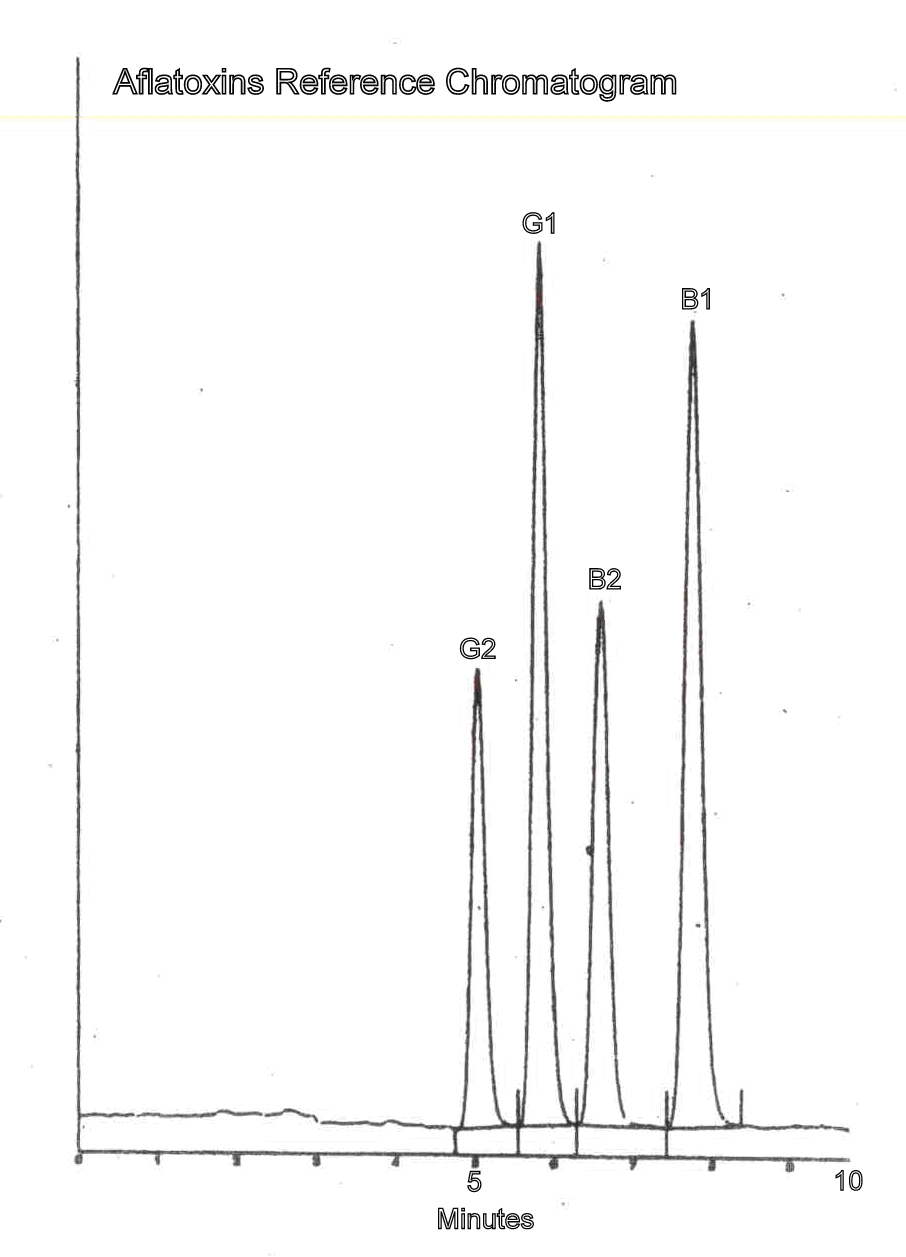
This past September, the NIST hosted a workshop in Bethesda, MD which brought together participants from several sample exercises. This was a great opportunity for labs and companies to come together to discuss and learn. Pickering Laboratories participated in the most recent Exercises by analyzing Aflatoxin in peanut samples.

We used our Photochemical reactor (UVE) and our AflaCLEAN Immunoaffinity columns for the sample cleanup. The results can be found on our new application note and in a presentation given to the group at the workshop.

We gave a quick presentation to the group on Thursday morning, detailing our method and results. We would love to share our talk titled simply  “Aflatoxin Analysis”. Just send us an email to support@pickeringlabs.com and we’ll send you a copy!

The Photochemical derivatization of Aflatoxins has been shown to be a very rugged and sensitive method for analyzing low-levels of the toxins. And the Immunoaffinity columns can be used to cleanup a very wide variety of sample matrices. Indeed, there have been several publications showing the results using Photochemical Derivatization.

We are now distributing Mycotoxin Immunoaffinity products for Ochratoxin and Aflatoxin. The performance and batch-to-batch reproducibility of the columns is exceptional and far exceeds that of other manufacturers. The columns can be used for any matrix, from wine and juice, to nuts and grains, to herbs and spices. Contact Sales for more information.

Definition of Acronyms:
NIH – National Institutes of Health
ODS – Office of Dietary Supplements, part of NIH
NIST – National Institute of Standards and Technology
DSLQAP – Dietary Supplement Laboratory Quality Assurance Program, formed by the ODS in collaboration with NIST
AHPA – American Herbal Products Association
AOAC – Association of Analytical Chemists

Laszlo Torma has also contributed a very nice piece about our Membership in the AHPA on our blog.

Special Alert: American Ale Takes 1st Place

In keeping with our company’s motto “Guaranteed Chemistry” our resident Technical Support Chemist, David Mazawa, brewed an American Pale Ale which won him the 1st place in the 2010 Reddit Homebrew competition. His beer was described as a nicely hopped beer that went well with a hot day.
So if you’re calling in with questions and you talk to David, be sure to Congratulate him. Who knows? If he’s feeling generous, he may share a bottle…


Photo of the 1st Place Trophy

Notice of Backwards Compatible Board for Pinnacle Users

The new Sigma Series Pinnacle PCX has rolled out with a lot of new features. A new Electronic Control Board is included to support many of these features. You will notice that the new boards are blue in color and have a USB connection replacing the RS-232 connection.

Customers with the older Delta Series Pinnacle PCX will have to purchase a backwards compatible board if they experience a board failure.

The backwards compatible board will have a slightly different relay connector to fit properly in the old chassis. The backwards compatible boards will have the most recent firmware, software, and also include a USB cable. Make sure to have your Pinnacle PCX Serial Number handy when ordering a replacement board.

Part Number

Description

Serial Numbers

1500-1507

Replacement board for Delta Series Pinnacle PCX

before 0510308

1500-1508

Replacement board for the Sigma Series Pinnacle PCX

after 0610300

David Mazawa

Technical Support Chemist
David.mazawa@pickeringlabs.com
(650)694-6700 x710

Polymers: To Eat Or Not To Eat

By Michael Pickering

The stationary phase in our amino acid columns is a polymer made of two monomers: styrene (vinyl benzene) and 1,4-divinylbenzene. If only styrene were used, the result is a thermoplastic substance, which is solid (glassy state) at room temperature, but flows if heated above its melting point. The divinylbenzene acts as a cross-linker by covalently connecting the linear polymer strands. The result is a spherical bead described as macro reticular, or big and tangled. Imagine a ball of string with some small strings knotted between two proximal intervals: polyethylene with one benzene moiety per unit. The mass ratio of cross-linker can be varied depending on the ultimate use of the bead. In our case, 8-12% is ideal.

At this stage, the bead is very hydrophobic. The final synthetic step to create a cation-exchange resin is to completely sulfonate the available phenyl rings. This provides the cationic-exchange functionality and allows for water to swell the bead, resulting in an accessible interior.


Mass transfer is osmotically controlled so the (w/w%) water in the interior is dependent on the cation in the mobile phase, i.e. Na (45%), Li (50%). For the same reason, higher normalities in the mobile phase also shrink the resin. The same hydrophobic polymer can be functionalized to create an anion-exchange phase (P-NR3X), a heavy metal scavenger (P-SH), et. al.

With a different set of synthons, chefs and mixologists worldwide are creating exciting and fun palate sensations. These edible experiments and discoveries are grouped under the umbrella of “Molecular Gastromy.”

One popular and successful idea produces hollow beads where the interior can capture and hold savory or sweet flavors and alcoholic beverages. The polymer employed is a common food thickener called sodium alginate, which is extracted from brown kelp and is water soluble. It is a linear polysaccharide with one carboxylate per unit. A bead spontaneously gathers on the surface when the sodium alginate solution is dripped into a solution of CaCl2.

.

The divalent Ca++ ion acts as the cross-linker. Since it is not a covalent bond, merely ionicly linked by the Calcium, a skin forms as a flexible bubble rather than as a solid bead.


The captured ingredients, either as a slurry or as a solution, are added to the gelatinous sodium alginate solution. The bead size is determined by drop size. The most popular size now being served is usually described as caviar in appearance, but I have seen pictures of beads larger than a softball. The harvested beads are robust and so may be washed, dried, and stored. People who have experienced them describe it as a thrilling sensation when the flavor beads burst in their mouth.

The most recent news I’ve heard about edible structures was in the New York Times (September 7, 2010, page D3). Not spheres, but clear nano-crystalline cubes are made by cross-linking a cyclic polysaccharide, a monovalent metal cation, and ethanol. The nano-cubes cluster to form millimeter-scale cubes. Unlike the beads, however, the cubes require one week to harvest. The good news is that they require no attention during the wait. Similarly to the beads, all ingredients are readily available in food grade quality. The N.Y. Times article was reporting on the work of Professor J. Fraser Stoddart of Northwestern University. The paper is to be published in the journal Angewandte Chemie this November.

The nano-crystals fall under a class of structures called metal-organic frameworks (MOFs) which are porous but rigid. The holding capacity is greater than half the volume. And as with the beads, the cubes can capture the solution they are formed in. Although in this particular case, the cubes do not form in acidic solutions.

Materials and Methods

Beads, sweet:
Mix:
1 cup pure water (tap water contains too much calcium)
¾ tsp sodium alginate
¼ cup any syrup, stir in last

Note: The polysaccharide dissolves slowly. It can be hastened by blending but then must be left to stand several hours for the bubbles to evanesce.

In the bead size desired, drop this solution into the following one.
Mix:
2 ¼ cups water
¾ tsp CaCl2

Cubes:
The following is adapted from the N.Y. Times article taken from the abstract about the Angewandte Chemie article.

A: 1 cup 190 proof ethanol

B: 2 ½ cups water
1 tsp gamma-cyclodextrin
1 tsp potassium benzoate
the flavor ingredient (Note: no alcohol or acids)
C: Sealable, airtight container, to scale


Assemble and set aside for at least one week. The cubes will form in the B solution and may be harvested and crunched.


Photos Credits:
Dessert and Cocktails photos taken by Amanda Lucier, of The Virginian-Pilot. Taken from HamptonRoads.com website

Sodium Calcinate “Caviar” photo taken from an article by Martin Lersch for Khymos

Chromatography Quiz No. 5 and Results from Quiz 4

Chromatography Quiz #4 Results
Congratulations to the grand prize winner of our last newsletter’s Amino Acid Chromatography Quiz: Matthew Hartz from Underwriters Laboratories!

He has won, and will shortly be receiving, a $150 gift card to Dick’s Sporting Goods! Additionally, for this quiz our other participants will each be receiving a $20 gift card from Amazon.com. Thank you all for your submissions!

The correct answer for the modified Amino Acid chromatogram: the guard column has been contaminated with proteins. The dirty guard causes poor peak shape and loss of resolution on key pairs of amino acids. Replacing the guard will restore the chromatography.

Thank you!
Pickering Labs

Chromatography Quiz #5:

Identify the error made when running the Carbamates chromatogram below and win a prize! Simply email your answer as well as your full contact information to Rebecca at rlsmith@pickeringlabs.com by December 15th in order to win. You will receive email confirmation that your submission has been received. The troubleshooting answer and winner congratulations will be published in the next issue (to be anonymous, please notify Rebecca in submission).

Carbamate Analysis for US EPA Method 531.1

Pickering Standard: 1700-0063 Carbamate Test Mixture, 2.5 µg/mL, 10 µL injection

Pickering Column: 1846250 Carbamate Column, C18, 4.6 x 250 mm

Normal Operating Conditions: (for reference only, condition changes may be reflected in chromatogram)

Column Temperature: 42 °C

Flow rate: 1 mL/min

Eluent Gradient:

TIME
WATER
MeOH %
0
85
15
1
85
15
44
25
75
44.1
0
100
49
0
100
49.1
85
15
57
85
15

Post-column conditions:
Reagent 1: Hydrolysis reagent CB130

Reagent 2: 100 mg of OPA, 2 g Thiofluor™ in 950 mL of CB910

Reactor 1: 100 °C, 0.5 mL

Reactor 2: ambient. 0.1 mL

Reagent flow rates: 0.3 mL/min

Detection: Fluorometer ex 330 nm, em 465 nm

For an example of a Good Carbamate Chromatogram, Click Here

Mouse Out! Chemistry In. Updates in Paralytic Shellfish Toxins

By Saji George

The paralytic shellfish toxins are a group of 18 secondary metabolites deposited in bivalve mollusks by dinoflagelates. Dinoflagelates blooms are seasonal, occurring during warm months. Since it is unpredictable whether an infestation will occur, the shellfish population should be regularly monitored for toxins. Ingestion of contaminated shellfish can lead to paralytic shellfish poisoning; a life-threatening illness.

Mouse bioassay is the official method of AOAC International, but the drawbacks associated with this method have led to exploration of chemical methods. The most common HPLC post-column method is to oxidize the separated toxins under alkaline conditions to a fluorescent compound. Sullivan et al. used this method to determine the gonyautoxins 1-6 (GTX1-6), saxitoxin (STX) and neosaxitoxin (neoSTX) but not the N-sulfocarbamoyl-11-hydroxysulfate toxins (C1-C4). Oshima et al. modified this method to determine the 3 toxin groups separately using isocratic elution with 3 different mobile phases. Further improvement by Jeffery van de Riet of the Canadian Food inspection Agency (CFIA) in collaboration with National Research Council Canada (CNRC) has led to a shorter analysis time to determine the 3 groups of toxins using step gradient and a switching valve.

Marine Biotoxins were a hot topic at the recent Pacific Northwest AOAC meeting in Tacoma, WA. According to Jeff, this method is also the topic of an AOAC interlaboratory study (currently underway) and has already been approved by the Shellfish Sanitation Program (NSSP) at the single laboratory validation (SLV) stage for use in the United States as a screening (type IV) method in shellfish monitoring. If approved by AOAC following the interlaboratory study as an official method of analysis (OMA) for shellfish, the method will then be eligible for consideration as a type II reference method by Codex Alimentarius This will also effectively end the use of mouse bioassays in shellfish monitoring within Canada.

This method was presented at the Annual Meeting of the Pacific NW Section, held at the University of Puget Sound (UPS) in Tacoma, which offered extensive laboratory training workshops this past June.

NEW Amino Acid method: Oxidized Feeds in 30 minutes

Dear Valued Customer,
We are pleased to announce the new 30 minutes Oxidized Feed method. This method uses the new fast sodium column 1154110T and utilizes the column temperature gradient with the Pinnacle PCX. Because this method uses a column temperature gradient, it is important to note that the method is not compatible for Vector or PCX5200 users.


Peak Identification
1. Cysteic Acid
2. Methionine Sulfone
3. Aspartic Acid
4. Threonine
5. Serine
6. Glutamic Acid
7. Proline
8. Glycine
9. Alanine
10. Valine
11. Isoleucine
12. Leucine
13. Phenylalanine
14. Lysine
15. Histidine
16. Ammonia
17. Arginine

Kits are available and include the following:

0352-0020 30 minute Oxidized Feed Kit – T100C
1154110T Qty 1 Column, Fast Sodium 4.6x110mm (includes 1700-070 Test Mix)
1700-3102 Qty 1 Kit, GARD Holder and 2 Cation GARD
1700-0155 Qty 1 Cal Standard, Feed Hydrolysate
Na220 Qty 1 Sodium Diluent, pH 2.20 4x250mL
Na270 Qty 1 Sodium Eluent, pH 2.80 4x950mL
Na740 Qty 1 Sodium Eluent, pH 7.40 4x950mL
RG011 Qty 1 Sodium Column Regenerant 4x950mL
T100C Qty 1 TRIONE, Ninhydrin Reagent 4x950mL

0352-0021 30 minute Oxidized Feed Kit – T200
1154110T Qty 1 Column, Fast Sodium 4.6x110mm (includes 1700-070 Test Mix)
1700-3102 Qty 1 Kit, GARD Holder and 2 Cation GARD
1700-0155 Qty 1 Cal Standard, Feed Hydrolysate
Na220 Qty 1 Sodium Diluent, pH 2.20 4x250mL
Na270 Qty 1 Sodium Eluent, pH 2.80 4x950mL
Na740 Qty 1 Sodium Eluent, pH 7.40 4x950mL
RG011 Qty 1 Sodium Column Regenerant 4x950mL
T200 Qty 1 TRIONE, Ninhydrin Reagent 2 part

0352-0022 30 minute Oxidized Feed Kit – O120
1154110T Qty 1 Column, Fast Sodium 4.6x110mm (includes 1700-070 Test Mix)
1700-3102 Qty 1 Kit, GARD Holder and 2 Cation GARD
1700-0155 Qty 1 Cal Standard, Feed Hydrolysate
Na220 Qty 1 Sodium Diluent, pH 2.20 4x250mL
Na270 Qty 1 Sodium Eluent, pH 2.80 4x950mL
Na740 Qty 1 Sodium Eluent, pH 7.40 4x950mL
RG011 Qty 1 Sodium Column Regenerant 4x950mL
O120 Qty 1 OPA, 5g
OD104 Qty 1 OPA Diluent 4x950mL
3700-2000 Qty 2 Thiofluor, 10g

Sincerely,


David Mazawa

Technical Support Chemist
Pickering Laboratories, Inc.
1280 Space Park Way
Mountain View, California 94043 USA
Phone: 650-694-6700, ext. 710
Toll Free: 800-654-3330, ext. 710
http://pickeringlabs.blogspot.com/

Guaranteed Chemistry