Formaldehyde is used in beauty products as a preservative, in the textile industry, in making plywood, composite wood items, adhesives, and many other products. Consumers can be exposed to the chemical in tobacco smoke, construction materials, furniture, carpets, and other household products. Formaldehyde is carcinogenic to humans, causes respiratory problems and skin irritation. It is now in the 20 high priority chemicals list for review by the EPA. In some industries, formaldehyde releasers are used and these slow-release free formaldehyde over time. The free and hydrolyzed forms of formaldehyde can be determined by HPLC method with post-column derivatization.
The Pickering Nash reagent comes in two parts, and can be mixed right before use. We sell two formulations, one according to the AATCC method 206 for colorimetric determination and the other according to ASTM D5910 for free and hydrolyzed formaldehyde for HPLC post-column method.
After recent research into packaging enhancements, we are now offering a replacement for part # NA220 (Sodium Diluent, pH 2.20, 4 x 250 mL). Effective immediately, we will be discontinuing NA220 and replacing with part # NA220L (Sodium Diluent, pH 2.20, 950 mL). The replacement part number, NA220L, will have the same list price as NA220 and is identical in composition.
Please contact Pickering Laboratories Support at (650)694-6700, (800)654-3330, or support@pickeringlabs.com if you have any questions.
As we listen to feedback and engage more with our customers, variations of our current PTS product offering are constantly springing to life! We have introduced a new Simulated Lung Fluid solution with DPPC Surfactant. Dipalmitoylphosphatidylcholine (DPPC) is a phospholipid and one of the main pulmonary surfactants found in lung fluid. The main function of DPPC is to reduce the surface tension of liquid in the lungs and to help adsorption of oxygen into the air-liquid interface. It is known to be a difficult process to bring DPPC into solution. With that in mind, we offer a synthetic lung fluid with DPPC dissolved and pre-mixed for your convenience:
Pickering Labs would like to congratulate the winners for our previous newsletter’s Chromatography Quiz:
Jim Balk from Nebraska Public Health Environmental Lab, Mike Klimas from Chromatographic Specialties, Tom Schneider from Suffolk County Water Authority, Narjes Ghafoori from Los Angeles County Public Health Laboratory, Josiah Hakala from Minnesota Department of Health, Jay Phoenix from Chromatographic Specialties and Chantale Parent from Chromatographic Specialties.
Winners have already received an Autumn Mornings Gift Basket! Filled with cozy bakery favorites!
Congratulations to our quiz winners! Thank you all for your submissions!
Answer to Quiz #40:
Trivia for Pickering’s 40 Year Anniversary (multiple choice)
When did Pickering Labs move to Space Park Way?
1998
1999
2000
2001
Michael Pickering was granted a United States trademark for the name_________.
Thiofluor
Mycotox
Trione
Restore
Which of the following was the first “product testing solution” produced by Pickering Labs?
Saliva
Lung Fluid
Urine
Perspiration
Pickering Laboratories won the AOAC Single Laboratory Validation Method of the Year for the following method:
Amino Acids
Ionophores
Cannabinoids
Mycotoxins
Michael Pickering was issued a United States Patent for the following product:
Thiofluor reagent
Ninhydrin reagent
Restore solution
Vanillin reagent
Which post-column system was introduced in the year 2006 as the lower cost option similar to the PCX 5200?
Vector PCX
Pinnacle PCX
CRX400
Onyx PCX
Which year did Pickering move to their current location at 1280 Space Park Way?
1997
1998
1999
2000
Which year was the Onyx PCX introduced?
2018
2019
2020
2021
Our Eccrine Perspiration solution was first developed by the request from ______.
Crime and Punishment
Crime Sciences Inc.
Crime Scene Investigation
True Detective
Pickering has been supporting the scientific community for nearly 30 years by continuously exhibiting at the following Conference:
It was not largely publicized, but I’ve been pursuing my Master’s degree for the last two years while continuing to work full-time at Pickering. With graduation from the Executive MBA program at the Kellogg School of Management at Northwestern University now behind me, our team here has encouraged me to share a little bit about my journey.
Me and my fiancé, Paul, at Kellogg’s graduation in late July.
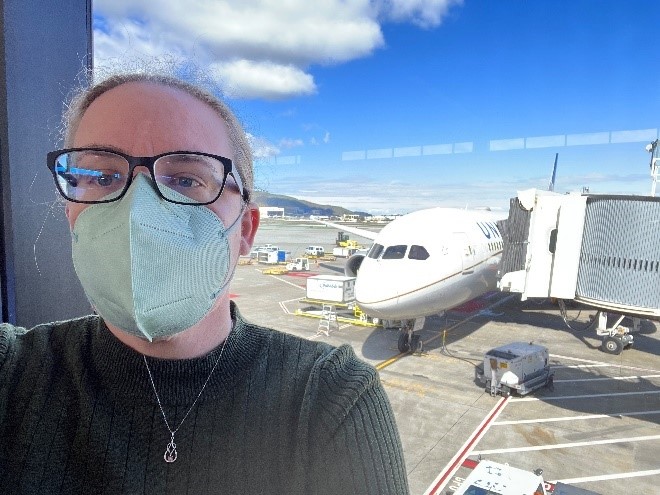
My tale starts in September 2020, when classes kicked off over Zoom (due to COVID-19) and rather inconveniently in the middle of an RV road trip to get our first Swissy puppy, Luna (which you may remember from a prior newsletter article). After seven months of early morning (East Coast start time!) virtual classes, I was able to start flying to the Miami campus for in-person monthly sessions in 2021.
I’m getting setup for class in the RV, while Paul does his own remote work.
Class in person was amazing, and I don’t just mean in comparison to Zoom. Dynamic discussions with top notch professors created rich learning. And being in person finally accelerated my chance to bond with my cohort, who came from richly diverse backgrounds in industry, experience and geography.
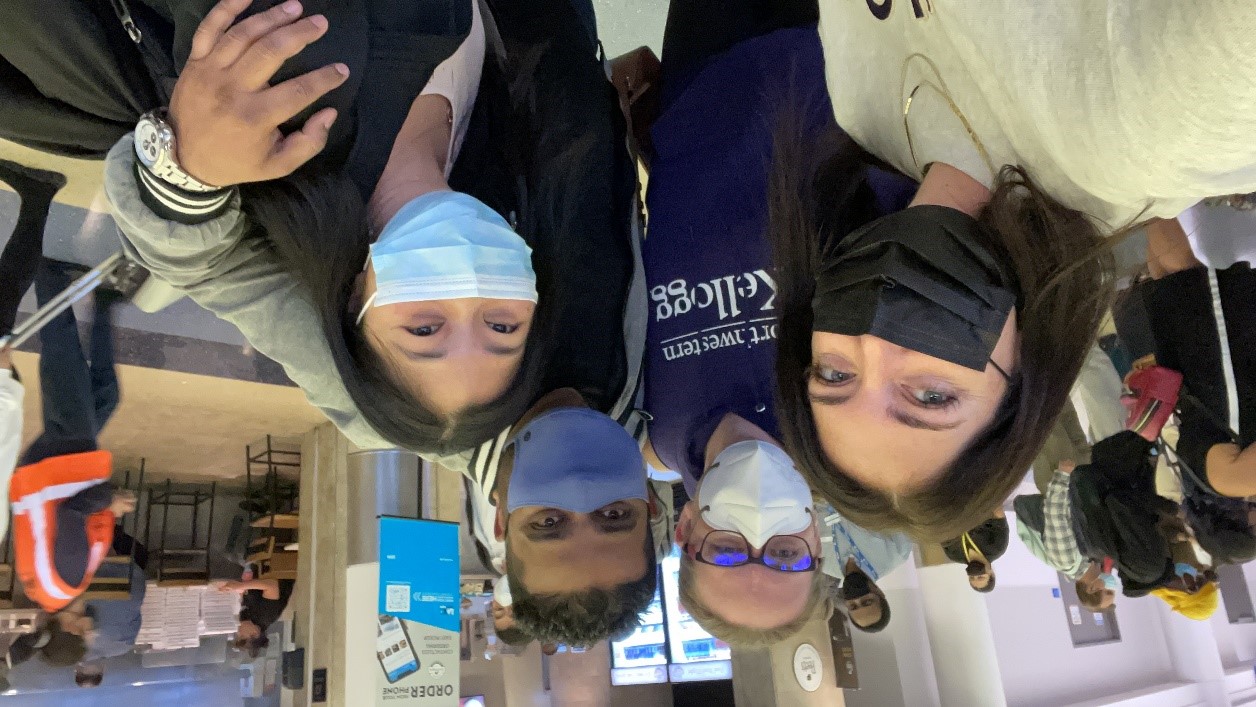
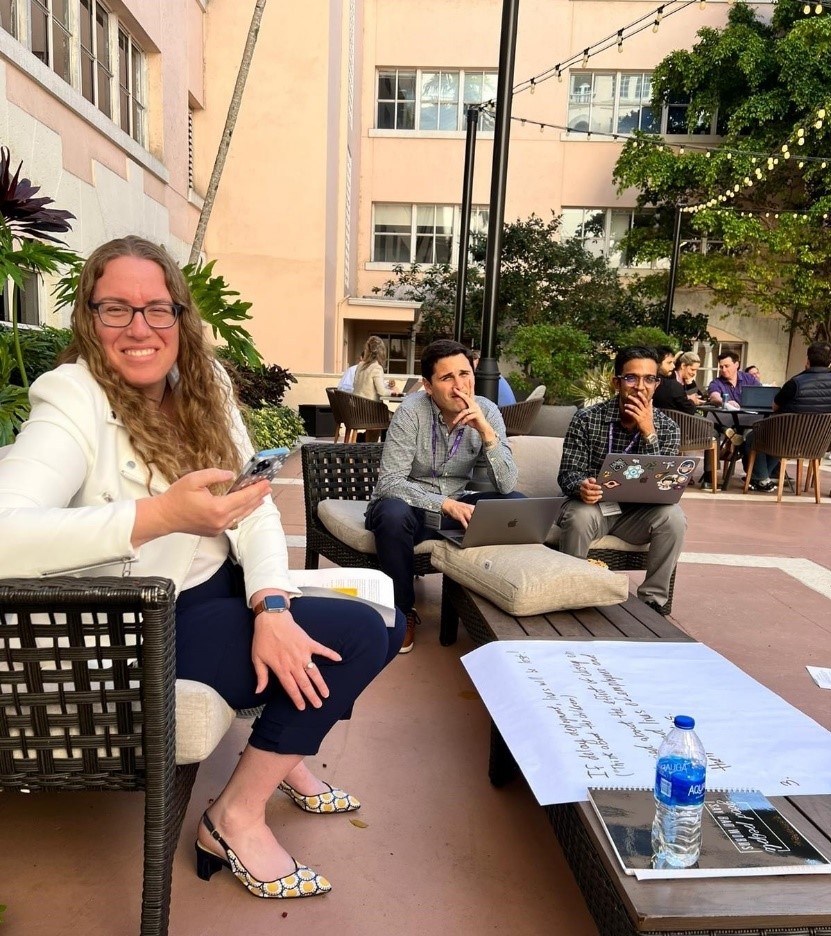
Some of the West Coast cohort members, during one of many weekends in the MIA airport!Doing some group work with my study group in Miami.
After completing core and advanced classes, taking several global electives provided me with an opportunity to mingle across the entire international network of cohorts from each of the seven Kellogg campuses. Marketing, finance and strategy classes provided plenty of opportunities for me to explore how other minds tackle and solve business problems in different ways from my own, highlighting exactly what’s so important in learning to embrace other perspectives.
Immersion in other countries and their business environments also provided unique chances to expand my awareness and find ways to tie in ideas for our small business here. Marketing and rebranding challenges for a small winery in Portugal are not that dissimilar from what Pickering might experience, after all. And learning about exporting wine internationally, alongside an international finance class, gave me a new outlook on our own global distribution network.
My elective in Evanston was a brisk experience!Exploring a different Cambridge than I’m accustomed to…
It was not long before international electives gave way to a final round of advanced curriculum in the spring, followed by Capstone in June and graduation in July. Our very special work during Capstone provided an opportunity to really stretch ourselves, and to combine knowledge across all the disciplines of prior coursework. Two of the most dynamic Kellogg professors teach this exceptional class and it is the ultimate way to bring the program to a close.
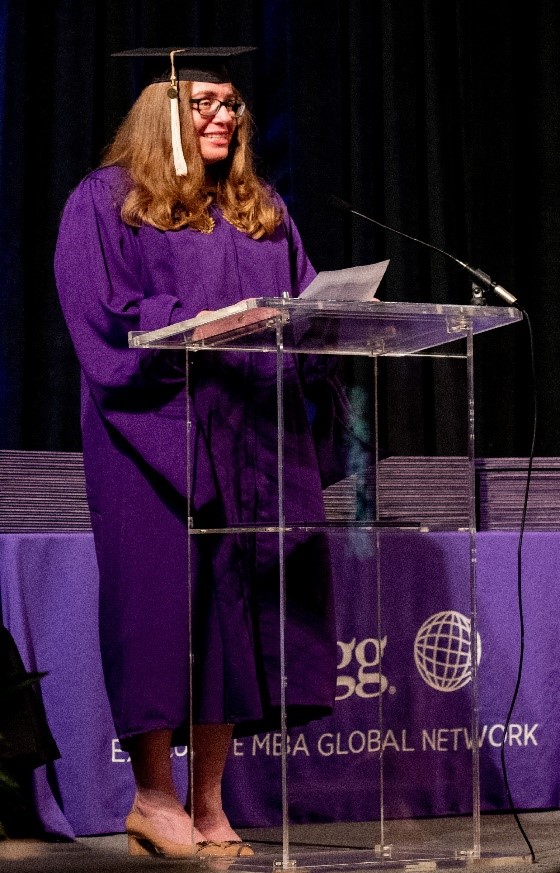
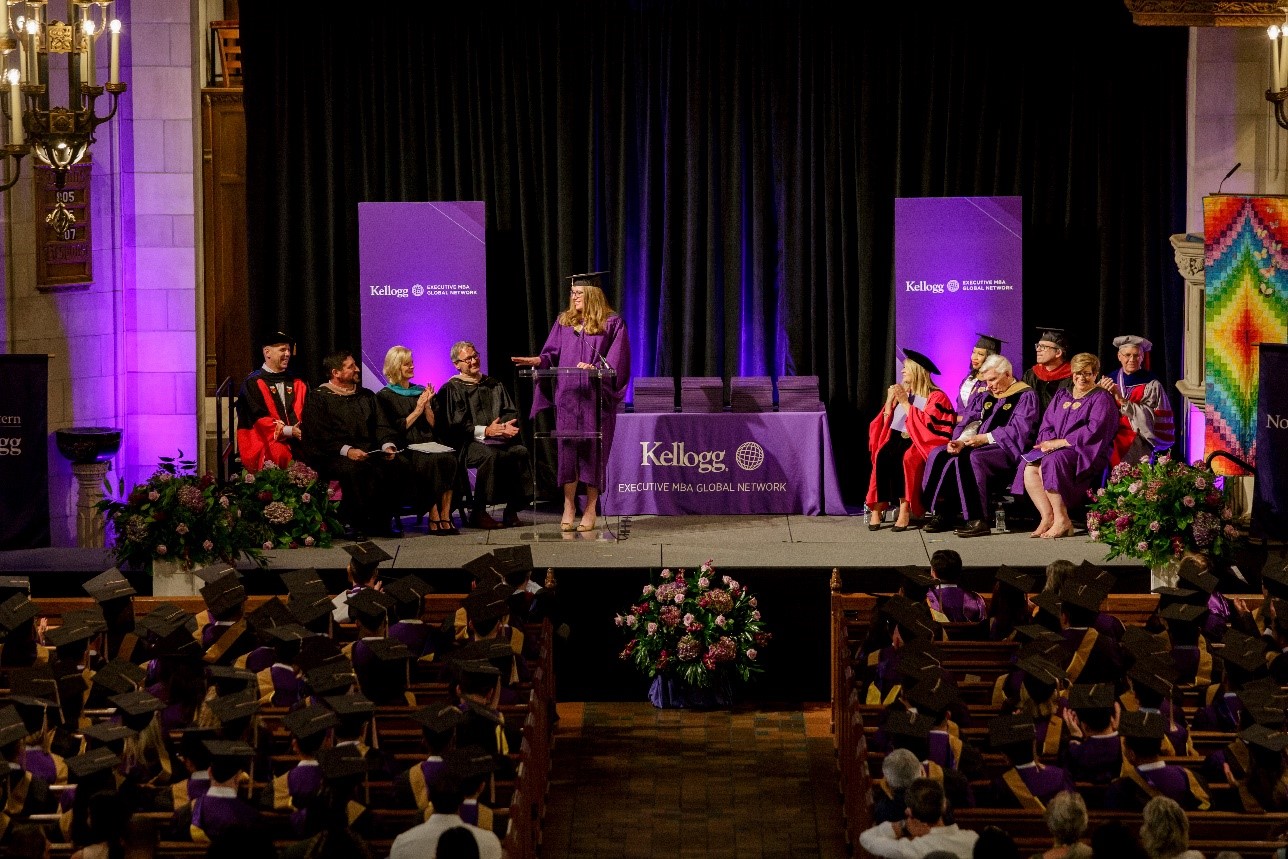
During our Capstone was also when I learned that my cohort selected me to prepare and deliver our graduation speech in Chicago the following month. What an honor, to represent these amazing people! What a challenge, to figure out exactly what words sum up where we’ve been and where we’ll go next! (What a nervous wreck I was on the actual day, speaking in front of over 1,000 people!)
In the end, I felt two topics were the best fit for our cohort: 1) gratitude for our families and supporters who lifted us up during this intense journey; and 2) highlighting the strength of our cohort’s bond and how it inspires and strengthens us to make positive impact in the world, together. Of course, I also threw in a couple inside jokes for laughs and tried for a few sentimental tears while I was up there.
As a newly minted graduate from Kellogg, I feel really grateful for the education I’ve received and connections I’ve made along the way. My EMBA cohort have become lifelong friends and collaborators. My professors have graciously made themselves available for questions or insights since program close. My education has already made a better person, able to lead with new insights.
Finally, I feel so much gratitude for the Pickering staff and the Board for supporting my efforts in adding this new layer of depth and experience to my role here at the lab. Being able to bring back what I learned at Kellogg into Pickering is the entire reason for all this hard work, after all! It will make me better prepared to shape our exciting future and support all aspects of our business.
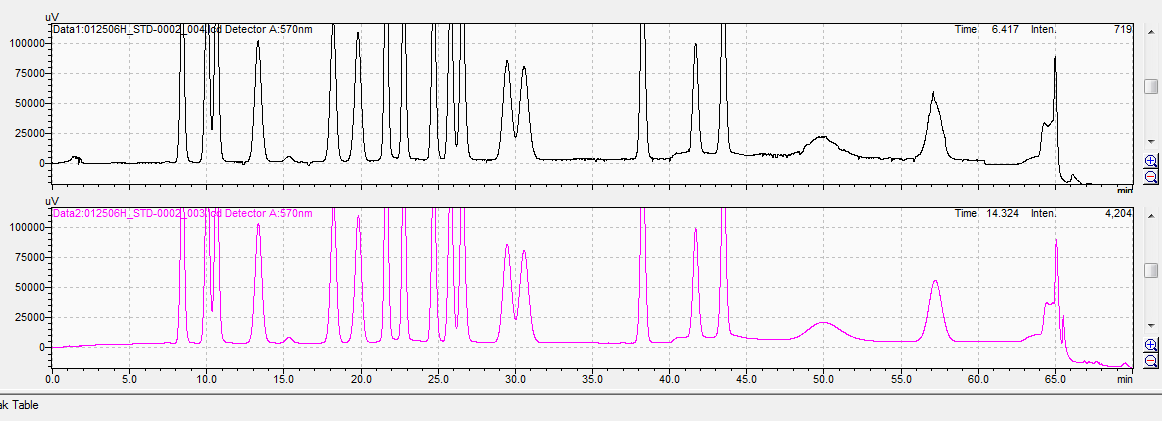
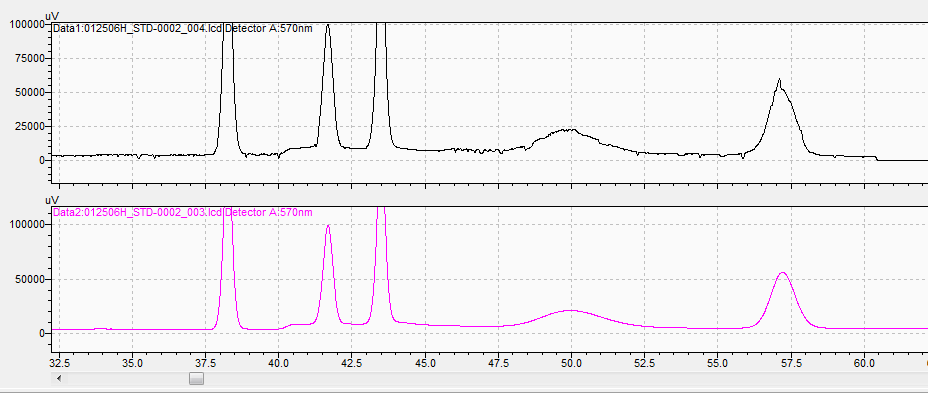
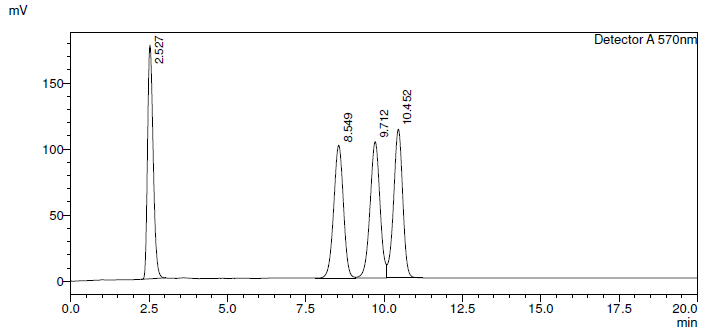
Please take note that part number 1700-0070 Amino Acid Test Mixture is obsolete, effective 17 August 2022. A direct replacement is available. The replacement has an additional amino acid, Aspartic Acid, to aid in Onyx PCX and Vector PCX Performance Qualifications for the amino acids method. Cysteic Acid is not retained by the stationary phase so its retention time may be used to troubleshoot void volume problems. The resolution between Threonine and Serine is used to troubleshoot column health and improper fitting placement in your system. See expected chromatogram below.
Please contact Pickering Laboratories Support at (650)694-6700, (800)654-3330, or support@pickeringlabs.com if you have any questions.
Obsolete Part #
Replacement Part #
Replacement Description
1700-0070
1700-0075
4-peak Amino Acids Test Mixture in 0.01 N HCl, 0.25 µmole/mL, each (5x1mL/bottle), L-Cysteic Acid, L-Aspartic Acid, L-Threonine, L-Serine
Our late friend and founder, Dr. Michael Pickering, began this journey in 1982. As the namesake of our company, Michael’s many achievements are reflected throughout our timeline but also in our company’s logo and especially in our “Guaranteed Chemistry” watermark, which we’ve updated for this special anniversary. We continue to uphold his legacy of high quality and dedicated support for our customers.
As you visit the timeline, you’ll be able to relive the important milestones that we’ve reached during the last four decades, including: a United States patent for our Ninhydrin reagent Trione, introduction of our PCX post-column instrumentation, publishment in official methods and many more highlights. If you look closely at our shiny new 40th anniversary logo, you may even see a familiar chromatogram or two!
We would like to extend a special “Thank You!” to all of the customers and dealers who have joined us throughout these historic four decades. We would not be a successful company still today without the trust, partnership and loyalty which you have shown us. As a small business, we want each of our customers to know that their orders over the years have supported and directly impacted our scientific contributions to the analytical community. We look forward to our partnership together for many years to come, as well.
And finally, we wish to acknowledge that we could not have made this company a success without our most valuable assets: our employees! As you may have noticed in the last couple newsletters, our very dedicated colleagues have been celebrating a lot of 20th and 30th work anniversaries lately! This fantastic team works so hard every day to support our customers; we are so proud and grateful to have them.
Please, we would be honored if you’d pop the champagne, raise a glass, and celebrate with us!
Cheers to our Pickering Labs family! Cheers to our customers and distributors! Cheers as well to sustaining Michael’s legacy for another 40 years!
And a clink of our glasses for the scientific work we all do in the world.
Guaranteed Chemistry
GDPR Notice
We use cookies on our website to give you the most relevant experience by remembering your preferences and repeat visits. By clicking “Accept”, you consent to the use of ALL the cookies.
Do not sell my personal information.Please note that you can always revisit and manage your cookie consent by clicking on a link found on our Privacy Policy page.
This website uses cookies to improve your experience while you navigate through the website. Out of these, the cookies that are categorized as necessary are stored on your browser as they are essential for the working of basic functionalities of the website. We also use third-party cookies that help us analyze and understand how you use this website. These cookies will be stored in your browser only with your consent. You also have the option to opt-out of these cookies. But opting out of some of these cookies may affect your browsing experience.
Necessary cookies are absolutely essential for the website to function properly. These cookies ensure basic functionalities and security features of the website, anonymously.
Cookie
Duration
Description
cookielawinfo-checkbox-advertisement
1 year
Set by the GDPR Cookie Consent plugin, this cookie is used to record the user consent for the cookies in the "Advertisement" category .
cookielawinfo-checkbox-analytics
11 months
This cookie is set by GDPR Cookie Consent plugin. The cookie is used to store the user consent for the cookies in the category "Analytics".
cookielawinfo-checkbox-functional
11 months
The cookie is set by GDPR cookie consent to record the user consent for the cookies in the category "Functional".
cookielawinfo-checkbox-necessary
11 months
This cookie is set by GDPR Cookie Consent plugin. The cookies is used to store the user consent for the cookies in the category "Necessary".
cookielawinfo-checkbox-others
11 months
This cookie is set by GDPR Cookie Consent plugin. The cookie is used to store the user consent for the cookies in the category "Other.
cookielawinfo-checkbox-performance
11 months
This cookie is set by GDPR Cookie Consent plugin. The cookie is used to store the user consent for the cookies in the category "Performance".
viewed_cookie_policy
11 months
The cookie is set by the GDPR Cookie Consent plugin and is used to store whether or not user has consented to the use of cookies. It does not store any personal data.
zenid
session
This cookie is required for the shopping cart login.
Functional cookies help to perform certain functionalities like sharing the content of the website on social media platforms, collect feedbacks, and other third-party features.
Performance cookies are used to understand and analyze the key performance indexes of the website which helps in delivering a better user experience for the visitors.
Cookie
Duration
Description
__utma
2 years
This cookie is set by Google Analytics and is used to distinguish users and sessions. The cookie is created when the JavaScript library executes and there are no existing __utma cookies. The cookie is updated every time data is sent to Google Analytics.
__utmb
30 minutes
Google Analytics sets this cookie, to determine new sessions/visits. __utmb cookie is created when the JavaScript library executes and there are no existing __utma cookies. It is updated every time data is sent to Google Analytics.
__utmc
session
The cookie is set by Google Analytics and is deleted when the user closes the browser. It is used to enable interoperability with urchin.js, which is an older version of Google Analytics and is used in conjunction with the __utmb cookie to determine new sessions/visits.
__utmt
10 minutes
Google Analytics sets this cookie to inhibit request rate.
__utmz
6 months
Google Analytics sets this cookie to store the traffic source or campaign by which the visitor reached the site.
Analytical cookies are used to understand how visitors interact with the website. These cookies help provide information on metrics the number of visitors, bounce rate, traffic source, etc.
Cookie
Duration
Description
calltrk_session_id
1 year
This cookie is set by the Provider CallRail. This cookie is used for storing an unique identifier for a user browser session. It is used for tracking the number of phone calls generate from the website.
Advertisement cookies are used to provide visitors with relevant ads and marketing campaigns. These cookies track visitors across websites and collect information to provide customized ads.
Other uncategorized cookies are those that are being analyzed and have not been classified into a category as yet.
Cookie
Duration
Description
calltrk_landing
6 minutes
This is a functionality cookie set by the CallRail. This cookie is used to store the landing page URL. It helps to accurately attribute the visitor source when displaying a tracking phone number.
calltrk_referrer
6 minutes
This is a functionality cookie set by the CallRail. This cookie is used to store the referring URL. It helps to accurately attribute the visitor source when displaying a tracking phone number.


 Formaldehyde is used in beauty products as a preservative, in the textile industry, in making plywood, composite wood items, adhesives, and many other products. Consumers can be exposed to the chemical in tobacco smoke, construction materials, furniture, carpets, and other household products. Formaldehyde is carcinogenic to humans, causes respiratory problems and skin irritation. It is now in the 20 high priority chemicals list for review by the EPA. In some industries, formaldehyde releasers are used and these slow-release free formaldehyde over time. The free and hydrolyzed forms of formaldehyde can be determined by HPLC method with post-column derivatization.