Category Archives: pickering laboratories

Lung Fluid with DDPC Surfactant

By: Maria Ofitserova

As we listen to feedback and engage more with our customers, variations of our current PTS product offering are constantly springing to life!  We have introduced a new Simulated Lung Fluid solution with DPPC Surfactant.   Dipalmitoylphosphatidylcholine (DPPC) is a phospholipid and one of the main pulmonary surfactants found in lung fluid. The main function of DPPC is to reduce the surface tension of liquid in the lungs and to help adsorption of oxygen into the air-liquid interface. It is known to be a difficult process to bring DPPC into solution. With that in mind, we offer a synthetic lung fluid with DPPC dissolved and pre-mixed for your convenience:

Chromatography Quiz #40 – Trivia for Pickering’s 40 Year Anniversary (multiple choice)

Announcing our Winners!

Pickering Labs would like to congratulate the winners for our previous newsletter’s Chromatography Quiz:

Jim Balk from Nebraska Public Health Environmental Lab, Mike Klimas from Chromatographic Specialties, Tom Schneider from Suffolk County Water Authority, Narjes Ghafoori from Los Angeles County Public Health Laboratory, Josiah Hakala from Minnesota Department of Health, Jay Phoenix from Chromatographic Specialties and Chantale Parent from Chromatographic Specialties. 

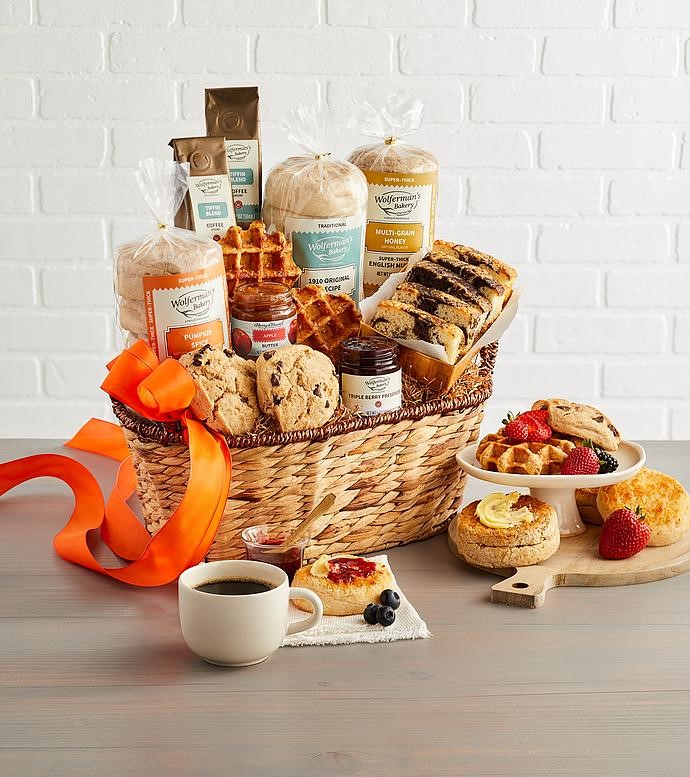
Winners have already received an Autumn Mornings Gift Basket! Filled with cozy bakery favorites!

Congratulations to our quiz winners!  Thank you all for your submissions!

Answer to Quiz #40:

Trivia for Pickering’s 40 Year Anniversary (multiple choice)

  1. When did Pickering Labs move to Space Park Way?
    1. 1998
    2. 1999
    3. 2000
    4. 2001
  2. Michael Pickering was granted a United States trademark for the name_________.
    1. Thiofluor
    2. Mycotox
    3. Trione
    4. Restore
  3. Which of the following was the first “product testing solution” produced by Pickering Labs?
    1. Saliva
    2. Lung Fluid
    3. Urine
    4. Perspiration
  4. Pickering Laboratories won the AOAC Single Laboratory Validation Method of the Year for the following method:
    1. Amino Acids
    2. Ionophores
    3. Cannabinoids
    4. Mycotoxins
  5. Michael Pickering was issued a United States Patent for the following product:
    1. Thiofluor reagent
    2. Ninhydrin reagent
    3. Restore solution
    4. Vanillin reagent
  6. Which post-column system was introduced in the year 2006 as the lower cost option similar to the PCX 5200?
    1. Vector PCX
    2. Pinnacle PCX
    3. CRX400
    4. Onyx PCX
  7. Which year did Pickering move to their current location at 1280 Space Park Way?
    1. 1997
    2. 1998
    3. 1999
    4. 2000
  8. Which year was the Onyx PCX introduced?
    1. 2018
    2. 2019
    3. 2020
    4. 2021
  9. Our Eccrine Perspiration solution was first developed by the request from ______.
    1. Crime and Punishment
    2. Crime Sciences Inc.
    3. Crime Scene Investigation
    4. True Detective
  10. Pickering has been supporting the scientific community for nearly 30 years by continuously exhibiting at the following Conference:
    1. ACS
    2. AOAC International
    3. Florida Pesticide Residue Workshop
    4. Pittcon

Chromatography Quiz #41 – Amino Acids Baseline Noise

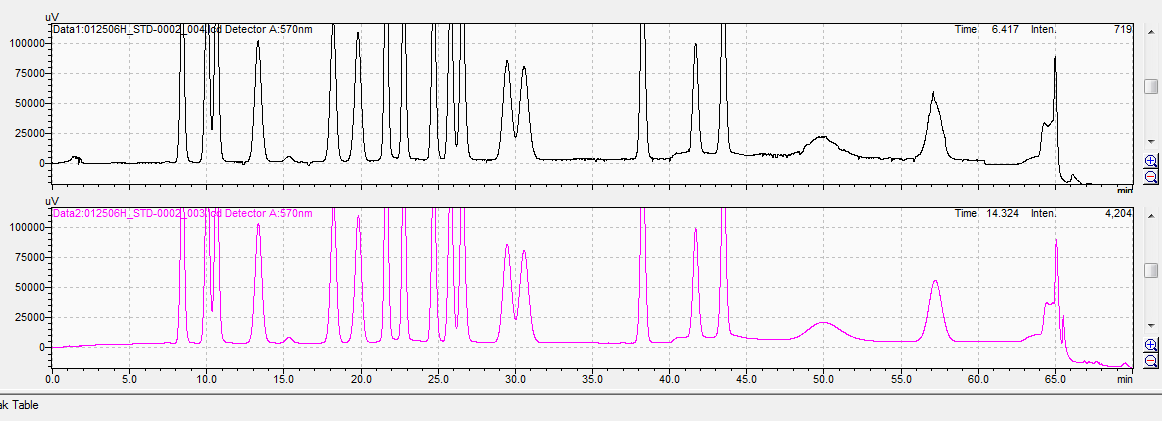
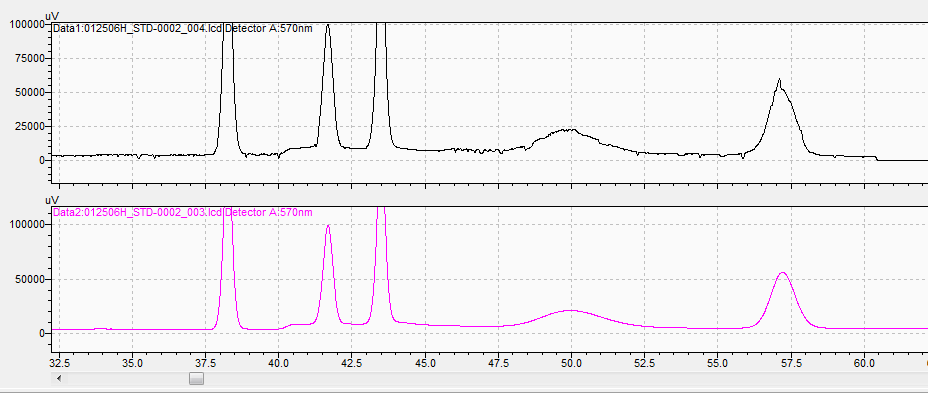
What is causing the baseline issues illustrated in the chromatograms below? Pink is a normal chromatogram for comparison.

Submit your answers to rsmith@pickeringlabs.com by Friday Feb 24th, 2023.

A Long and Fruitful Journey

By Rebecca Smith

It was not largely publicized, but I’ve been pursuing my Master’s degree for the last two years while continuing to work full-time at Pickering.  With graduation from the Executive MBA program at the Kellogg School of Management at Northwestern University now behind me, our team here has encouraged me to share a little bit about my journey.

Me and my fiancé, Paul, at Kellogg’s graduation in late July.

My tale starts in September 2020, when classes kicked off over Zoom (due to COVID-19) and rather inconveniently in the middle of an RV road trip to get our first Swissy puppy, Luna (which you may remember from a prior newsletter article). After seven months of early morning (East Coast start time!) virtual classes, I was able to start flying to the Miami campus for in-person monthly sessions in 2021.   

I’m getting setup for class in the RV, while Paul does his own remote work.

Class in person was amazing, and I don’t just mean in comparison to Zoom.  Dynamic discussions with top notch professors created rich learning.  And being in person finally accelerated my chance to bond with my cohort, who came from richly diverse backgrounds in industry, experience and geography.

Some of the West Coast cohort members, during one of many weekends in the MIA airport!
Doing some group work with my study group in Miami.

After completing core and advanced classes, taking several global electives provided me with an opportunity to mingle across the entire international network of cohorts from each of the seven Kellogg campuses. Marketing, finance and strategy classes provided plenty of opportunities for me to explore how other minds tackle and solve business problems in different ways from my own, highlighting exactly what’s so important in learning to embrace other perspectives.

Immersion in other countries and their business environments also provided unique chances to expand my awareness and find ways to tie in ideas for our small business here.  Marketing and rebranding challenges for a small winery in Portugal are not that dissimilar from what Pickering might experience, after all.  And learning about exporting wine internationally, alongside an international finance class, gave me a new outlook on our own global distribution network.

My elective in Evanston was a brisk experience!
Exploring a different Cambridge than I’m accustomed to…

It was not long before international electives gave way to a final round of advanced curriculum in the spring, followed by Capstone in June and graduation in July.  Our very special work during Capstone provided an opportunity to really stretch ourselves, and to combine knowledge across all the disciplines of prior coursework.  Two of the most dynamic Kellogg professors teach this exceptional class and it is the ultimate way to bring the program to a close. 

During our Capstone was also when I learned that my cohort selected me to prepare and deliver our graduation speech in Chicago the following month.  What an honor, to represent these amazing people!  What a challenge, to figure out exactly what words sum up where we’ve been and where we’ll go next!  (What a nervous wreck I was on the actual day, speaking in front of over 1,000 people!) 

In the end, I felt two topics were the best fit for our cohort: 1) gratitude for our families and supporters who lifted us up during this intense journey; and 2) highlighting the strength of our cohort’s bond and how it inspires and strengthens us to make positive impact in the world, together. Of course, I also threw in a couple inside jokes for laughs and tried for a few sentimental tears while I was up there.

As a newly minted graduate from Kellogg, I feel really grateful for the education I’ve received and connections I’ve made along the way. My EMBA cohort have become lifelong friends and collaborators. My professors have graciously made themselves available for questions or insights since program close. My education has already made a better person, able to lead with new insights.

Finally, I feel so much gratitude for the Pickering staff and the Board for supporting my efforts in adding this new layer of depth and experience to my role here at the lab. Being able to bring back what I learned at Kellogg into Pickering is the entire reason for all this hard work, after all! It will make me better prepared to shape our exciting future and support all aspects of our business.

4-peak Amino Acids Test Mixture in 0.01 N HCl, 0.25 µmole/mL, each (5x1mL/bottle), L-Cysteic Acid, L-Aspartic Acid, L-Threonine, L-Serine PN 1700-0075

Please take note that part number 1700-0070 Amino Acid Test Mixture is obsolete, effective 17 August 2022. A direct replacement is available. The replacement has an additional amino acid, Aspartic Acid, to aid in Onyx PCX and Vector PCX Performance Qualifications for the amino acids method. Cysteic Acid is not retained by the stationary phase so its retention time may be used to troubleshoot void volume problems. The resolution between Threonine and Serine is used to troubleshoot column health and improper fitting placement in your system. See expected chromatogram below.

Please contact Pickering Laboratories Support at (650)694-6700, (800)654-3330, or support@pickeringlabs.com if you have any questions.

Obsolete Part #

Replacement Part #

Replacement Description

1700-0070

1700-0075

4-peak Amino Acids Test Mixture in 0.01 N HCl, 0.25 µmole/mL, each (5x1mL/bottle), L-Cysteic Acid, L-Aspartic Acid, L-Threonine, L-Serine

Pickering Laboratories Celebrates Our 40th Anniversary!

By: Rebecca Smith

Pickering's 40-year anniversary logo

It is with great pride that we announce the celebration of our 40-year anniversary in 2022! 

As part of our efforts to honor this milestone achievement, we created an interactive timeline of our history.  It can be found at the following link: https://www.pickeringlabs.com/contact-us/about-us/#40-year-anniversary.

Our late friend and founder, Dr. Michael Pickering, began this journey in 1982.  As the namesake of our company, Michael’s many achievements are reflected throughout our timeline but also in our company’s logo and especially in our “Guaranteed Chemistry” watermark, which we’ve updated for this special anniversary.  We continue to uphold his legacy of high quality and dedicated support for our customers. 

As you visit the timeline, you’ll be able to relive the important milestones that we’ve reached during the last four decades, including: a United States patent for our Ninhydrin reagent Trione, introduction of our PCX post-column instrumentation, publishment in official methods and many more highlights.  If you look closely at our shiny new 40th anniversary logo, you may even see a familiar chromatogram or two!

We would like to extend a special “Thank You!” to all of the customers and dealers who have joined us throughout these historic four decades.  We would not be a successful company still today without the trust, partnership and loyalty which you have shown us.  As a small business, we want each of our customers to know that their orders over the years have supported and directly impacted our scientific contributions to the analytical community.  We look forward to our partnership together for many years to come, as well.

And finally, we wish to acknowledge that we could not have made this company a success without our most valuable assets: our employees!  As you may have noticed in the last couple newsletters, our very dedicated colleagues have been celebrating a lot of 20th and 30th work anniversaries lately!  This fantastic team works so hard every day to support our customers; we are so proud and grateful to have them. 

Please, we would be honored if you’d pop the champagne, raise a glass, and celebrate with us! 

Cheers to our Pickering Labs family!  Cheers to our customers and distributors!  Cheers as well to sustaining Michael’s legacy for another 40 years! 

And a clink of our glasses for the scientific work we all do in the world.
Team Time in ‘21

By Christopher Nguyen and Gloria Garcia

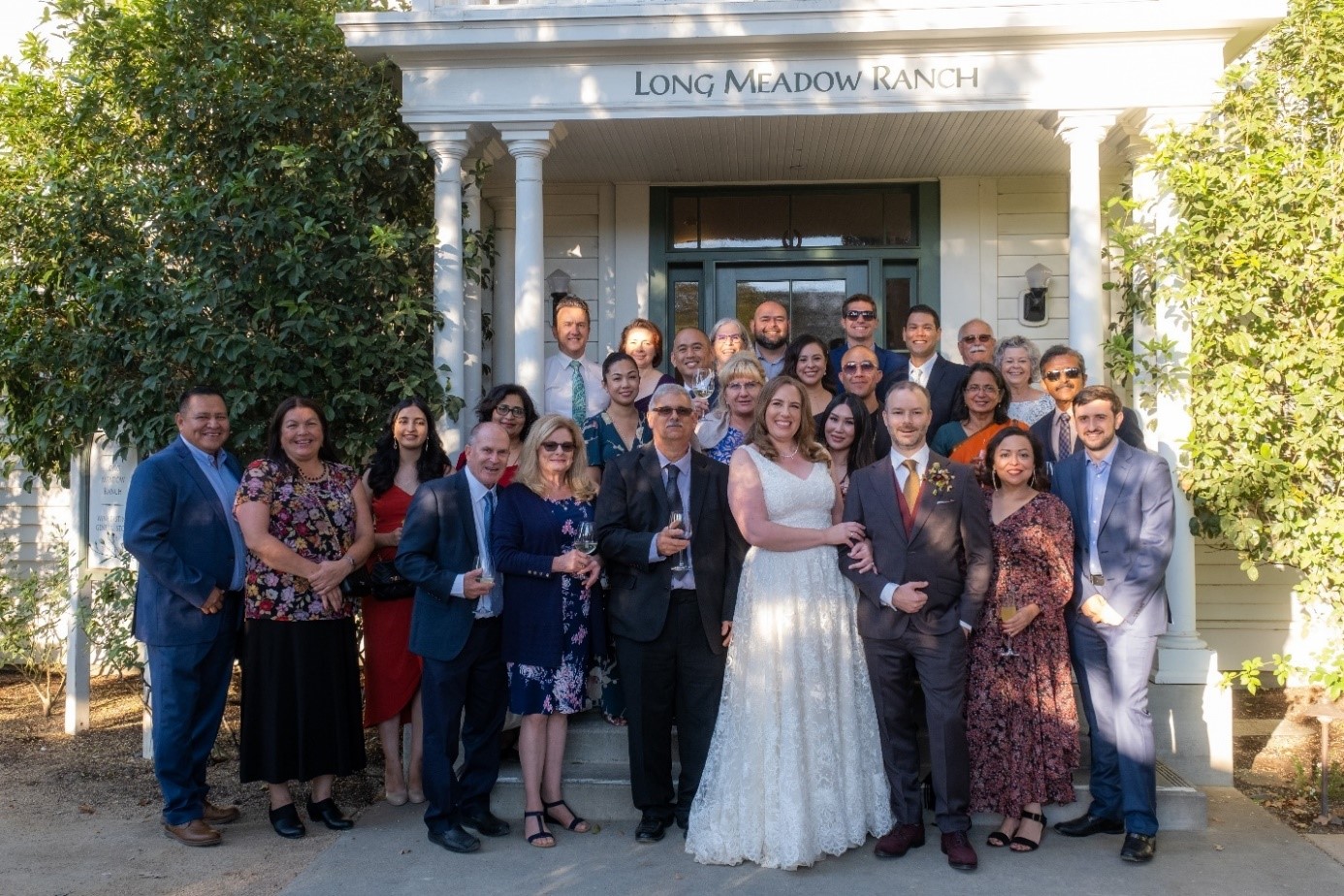
Now that we have good COVID-19 vaccination rates among employees at Pickering Labs and less restrictions from the county, we finally got together as a team after over a year of essential work, social distancing, and boxed lunches.  Our breakroom has been closed for months too, so everyone has been eating in their cars or at their desks.  Finally, last week was our first chance to get together as a whole team in the sunshine and fresh air (to enjoy some… boxed lunch LOL). 

Since his hire back in November, Kevin McKeown our new Sales Manager has been remotely working from his home on the East Coast.  Kevin couldn’t pass up a chance to hit California for a week at his earliest opportunity, so we threw him a little [belated] welcome luncheon while he was here. 

Pickering Lunch - group photo 1

Kevin pictured above, meeting Chris and seeing David for the first time since March 2020 at Pittcon.  We wonder… is it any different having lunch with Jim Murphy now that he’s your boss, Kevin?  😉

This was also the perfect opportunity for Kevin and Chris, both pandemic hires, to meet Judy Pickering as well!  She came onsite for lunch and is shown below chatting with Saji, Rebecca and Maria.  Both Gloria and Judy share a love of sunflowers, so we enjoyed some beautiful centerpieces for lunch!

Pickering Lunch - group photo 2

Earlier in the week, Christopher was also finally able to take his Production Team out for a much-deserved lunch!  (Nice of them to invite Kevin along to enjoy good food and even better company.) 

Pickering Lunch - group photo 3

Pictured here: Kevin, Skip, Anita, Severo, Gabriela, Jay, Sareeta, Craig, Ed and Chris.  Good looking crew!

Bread Rises

SF-SourdoughRising to the Occasion
Michael Pickering

My wife Judy baked bread recently for our annual St. Patrick’s Day luncheon at Pickering Labs.  She’s an excellent baker, and her Irish Soda Bread is a favorite addition to the corned beef and cabbage “traditional” fare.  Soda bread uses baking soda instead of yeast as the rising agent for the dough.  In addition to baking soda, her recipe also calls for flour, salt, and buttermilk.  This is typical for soda bread, as the buttermilk contains the lactic acid required for the ‘rising’ reaction with the sodium bicarbonate. 

Having grown up in Southern California, I have fond childhood memories of another special kind of bread – Salt-Rising Bread.  This denser bread relies on the fermentation of salt-tolerant bacteria in cornmeal.  The cornmeal must be freshly stone ground, and the dry ingredients also include sugar and salt.  The starter is formed as scalded milk is poured over the dry ingredients, and then left to incubate for about twelve hours at 100 or so degrees.  Despite its name, salt is a relatively minor ingredient in the bread. 

The Van de Kamp’s bakery had a rich history which straddled my own childhood and years living in the greater Los Angeles area.  Although the bakery was originally sold by the Van de Kamp family back in the 1950’s when Theodore Van de Kamp died, the Dutch windmill style bakeries and fresh salt-rising bread remained a warm memory for many of us Southern California children.  When accompanying my mom to buy our bread, I was treated on more than one occasion to a free windmill toy and a cookie. 

By the mid-1970’s, the Van de Kamp bakeries had stopped baking the salt-rising bread I grew up on, but by that point I had left Southern California and moved up to the Bay Area, a region where the Van de Kamp bread had been seldom offered and shortly went out of business.  However, in San Francisco, sourdough bread reigned supreme and had since the California Gold Rush.

Sourdough bread also uses natural microbes as a rising agent, but the longer fermentation of the starter allows the Lactic Acid produced by the Lactobacillus to give the bread a uniquely sour taste.  Naturally occurring yeasts such as Saccharomyces exigua and Saccharomyces cerevisiae also participate in the rising.  Sourdough yeasts work slower than today’s packaged yeasts, increasing the time needed for fermentation to multiple days.  San Francisco sourdoughs are usually kept closer to 70 degrees and often need a week to become stabilized.

Flour and water are combined in the starter, and various methods for introducing micro-organisms and stabilizing the dough are used.  Often times, boiled potatoes are used to help increase the activity of the bacteria.  Creating a sourdough starter is a baker’s science, and each recipe is unique and starter closely monitored.  As a result, bakers are often using “mother dough” that is many years old.  Some bakeries, such as the Boudin Bakery, are able to trace their “mother dough” back to the Gold Rush era. 

During the 1980’s, as modern food processes and general business consolidation trended, San Francisco bakeries fell into the hardship of competition with prepackaged bread.  Smaller bakeries were driven out of business, and the long-term survivors tended to be the larger bakeries with well-established distribution channels.  I moved to Oregon during this time, and my observations upon returning to the Bay Area some years later made it clear that there was a stark change in the availability of good local sourdough bread.  Fortunately for my family, Judy was at the peak of her baking heyday during this time and we were seldom lacking in good bread around my house!

Fast forward to now, and the artisan bread movement has brought back the ability to purchase good, hand-made loaves of bread.  Specialty bakeries have been started and thrive in high numbers.  Even restaurants and grocery stores are taking the time to bake their own bread.  I personally continue to feel that no sourdough of modern San Francisco origin can compete to the distinct sour taste and texture of earlier days, but there is no Pickering starter dough dating back to 1970 lurking in my refrigerator, so I make do with what’s available.  It is my sincere hope that the continued evolution of artisan bread, gastronomy, and the souring culture will ultimately recreate my ideal sourdough again soon. 

Until then, at least we can look forward to St. Patrick’s Day each year, when Judy will rise to the occasion and bake a unique bread to treat us all again!