

By Michael Pickering
My wife and I had the great pleasure of traveling to Kenya this year for a couple of weeks. As Judy and her friend (our traveling companion) are both avid photographers, we’ve got some spectacular pictures to share. Everyone at Pickering Labs has enjoyed the stories and photos, and I am hoping that you’ll find them entertaining as well.
Judy and I visited five conservancies in total while we were in Kenya, traveling around for the better part of three weeks. As such, we have thousands of animal photos to share, which I am told is a bit too many for the Pickering Labs webpage. So, Judy has helped me select several choices for public consumption and we have included links to the places we have traveled for more information than I will detail here.
In Nairobi, we first visited the Sheldrick Wildlife Trust. This conservancy focuses on the protection and preservation of elephants and rhinos. We were able to visit with orphaned elephants, and even saw that the baby elephants learn to bottle-feed themselves during their fostering! In the second picture below, you can see me posing with Mbegu, the orphaned elephant we “adopted” during our visit. She came to the conservancy at a very young age and injured, but we are happy to report she has made a full recovery and is thriving in her new community of orphaned elephants and their faithful and hardworking keepers.
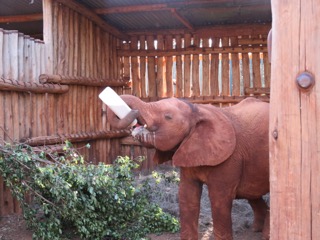
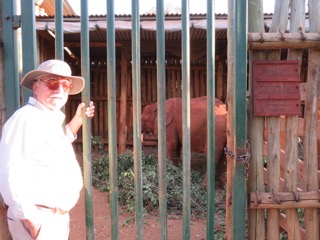
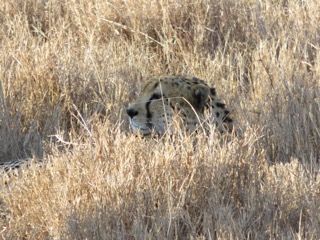
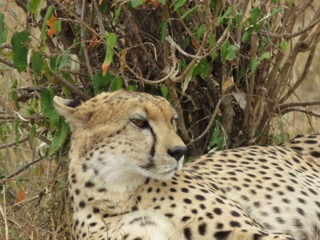
From Nairobi we continued north to Sambaru, where we were able to see a lot of African wildlife! We watched elephants drinking from wells that the local people maintain for both themselves and the wildlife. We also saw Grevy zebra (an endangered species) and cheetas when we visited the Lewa Wilderness Camp. In addition to staying in the lodge, we also visited some of the 62,000 acres of conserved lands there.
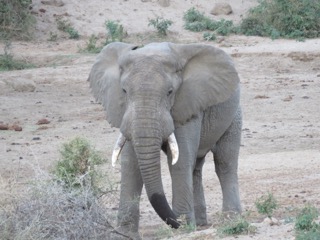
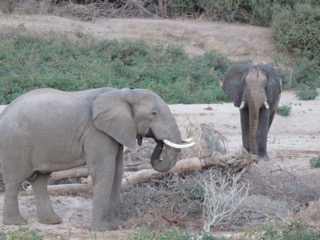
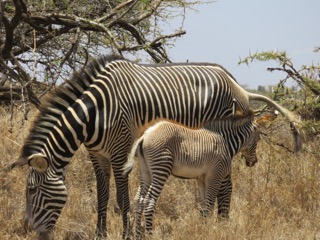
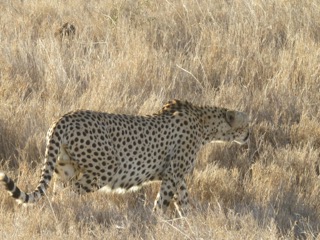
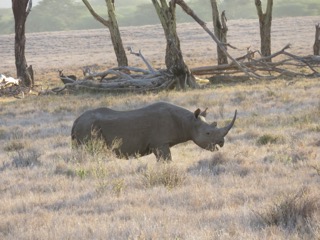
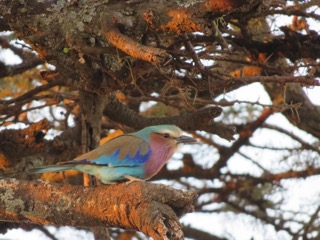
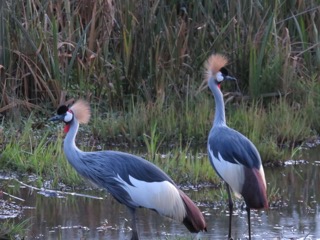
Lewa lands are home to over 70 different animal species and 350 different bird species. Lewa is particularly famous as a leading rhino sanctuary, so I wanted to share a photo of the Black Rhino with you. We also learned that of the 3,000 Grevy zebra remaining worldwide, a full 20% make their home on this conservancy. The birds we spotted onsite were spectacular! Here is a picture of the lilac-breasted roller and a pair of crowned cranes for your enjoyment.
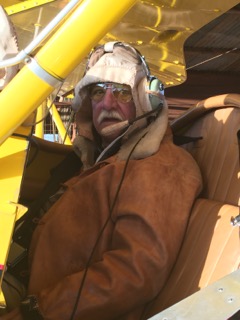
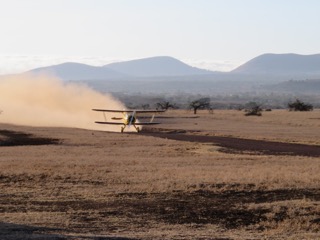
Inspired by the multitudes of birds surrounding us, I was also eager to take flight! Lewa has an amazing biplane, and although Judy remained earthbound, I was able to take a ride in the skies and view the wildlife from a whole new vantage point! The biplane experience came complete with the classy attire necessary to remain comfortable during the ride, much to my wife’s delight.
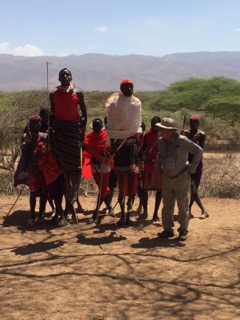
We travelled to a Maasai village and the local warriors performed traditional dancing to welcome me to their village. You can see in the photo below how incredibly high they jump! Judy has video of this dancing, and my attempts to join in on the fun, but there are some visuals best left to the imagination. Let’s just say that when Judy tells this story at the lab, everyone is cracking up by the time she’s done.
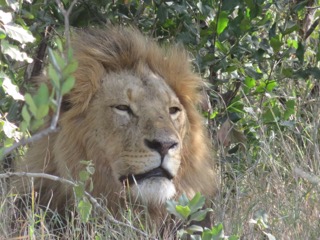
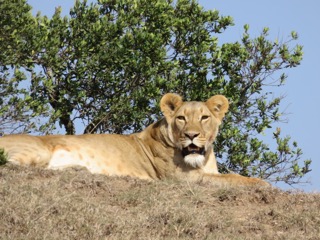
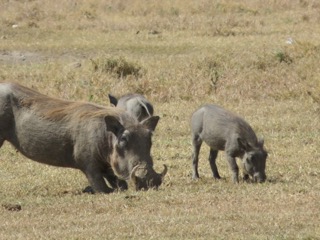
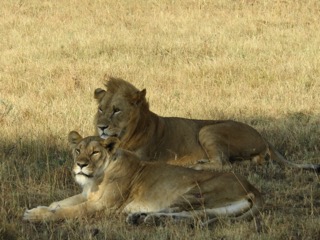
From there, we crossed the equator and visited Ol Pejeta Conversancy and saw lions and warthogs pictured above. Ol Pejeta is the largest Black Rhino conservancy in East Africa, with 108 Black Rhinos on site. We also visited their Endangered Species Enclosure and below you will see a picture of me meeting the last male Northern White Rhino on the planet.
C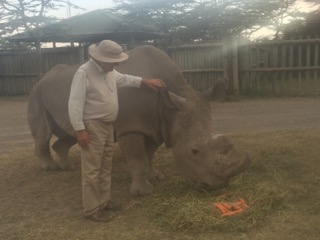 onsidered extinct in the wild, the last three Northern White Rhinos are protected at Ol Pejeta, where they are kept under 24-hour armed guard and enjoy a 700-arce enclosure. Unfortunately, breeding efforts have proven unsuccessful – it has been determined that the females, Fatu and Najin, are unable to naturally reproduce. Sudan, the 43-year old male in the picture, is an older fellow and his sperm count is pretty low… But there is hope that artificially-assisted reproduction is a possibility and the Northern White Rhino subspecies can be saved from complete extinction. This is an international effort, and you can learn more about the efforts taking place right here in California on the San Diego Zoo’s webpage.
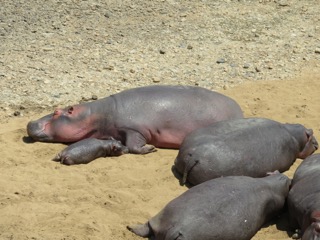
From Ol Pejeta, we flew to the Masai Mara Reserve, which is where the prey animals cross the Mara River. Although the Wildebeest migration occurs between July-October, we missed the massive herds moving through. Instead, we saw a whole lot of hippos! You can see them below, and notice the baby sunbathing with mom! We also took photos of more cheetahs and lions. I won’t share those particular pictures, but these lions were definitely an actively mating pair!
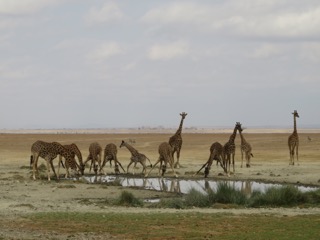
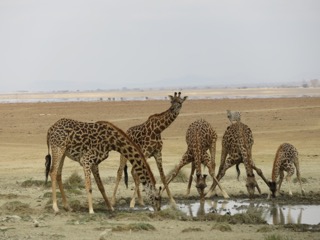
After Ol Pejeta, we traveled to our final stop at the Amboseli National Park. We found the highlight of our time there to be the herds of Maasai giraffe. Particularly fun was watching them drinking from a pond, as you can see in these pictures.
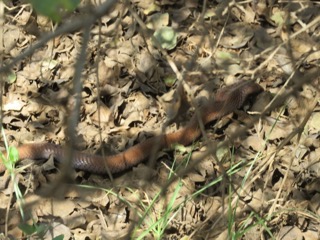 On our very last day in Kenya, we were treated to a rare treat. I was sitting outside the lodge, soaking in the sights and sun, when I spotted movement at the edge of the lawn. There was some distance of grass forming a manmade lawn, and from there a clear edge to more natural foliage, fallen leaf debris and assorted bush. Running parallel to the lawn, I watched as something moved just exactly along the edge. Of course I needed to evaluate from a closer distance, so I called to Judy to bring the camera and set out across the grass. A snake! How excellent! By the time Judy arrived with the camera it had moved off some ways into the brush, but we were able to take enough pictures that, combined with my detailed descriptions, the lodge safari guide was able to find the snake in his book: a black-necked spitting cobra! Truly a delightful find.
 Pickering Labs would like to congratulate the winners of our last newsletter’s Glyphosate Quiz: David Green from Pepperdine University Natural Science Division, Jim Balk from the DHHS Public Health Environmental Laboratory, Narjes Ghafoori from LA County Environmental Toxicology Lab, Karissa Scroggins from North Coast Laboratories, Helene Lachance from Shur-Gain Nutreco, Tom Schneider from Suffolk County Water Authority, and Irene Taylor from Orange County Utilities Water Division Laboratory!
 Rebecca Smith and David Mazawa hopped on a quick flight down to John Wayne Airport earlier this month, but they weren’t heading to Disneyland! Pickering Laboratories, Inc. was proud to sponsor and exhibit at the 2016 Environmental Measurement Symposium, which is the combined meeting of the Forum on Environmental Accreditation and the
  Pickering Labs would like to congratulate our winners of our last newsletter’s AAA quiz: Wanda Ingersoll from Mississippi Public Health Lab, David Green from Pepperdine University Natural Science Division, Narjes Ghafoori from LA County Environmental Toxicology Lab, and Helene Lachance from Shur-Gain Nutreco!
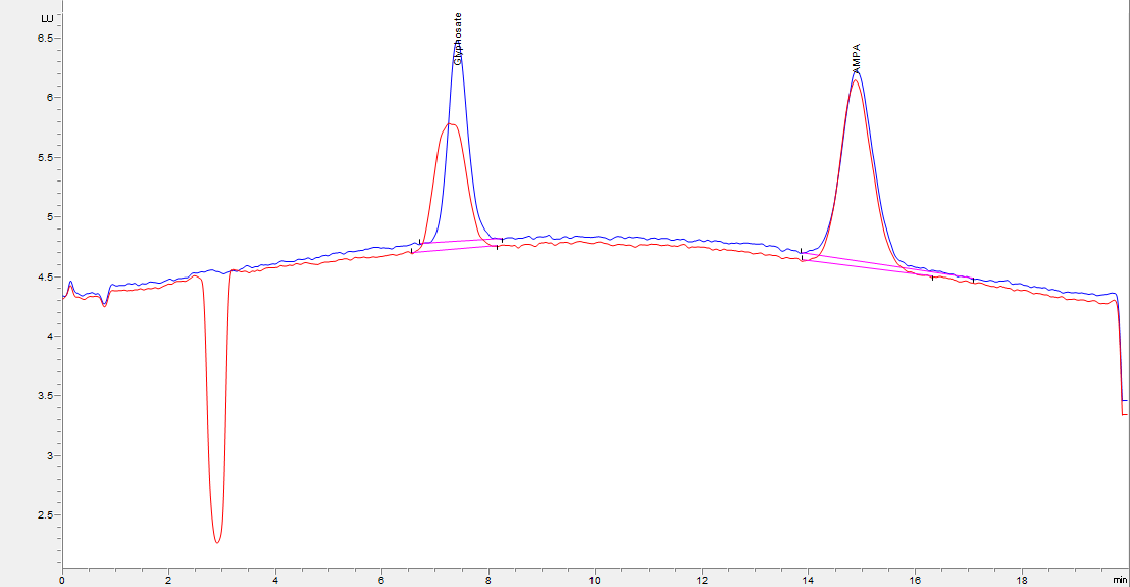
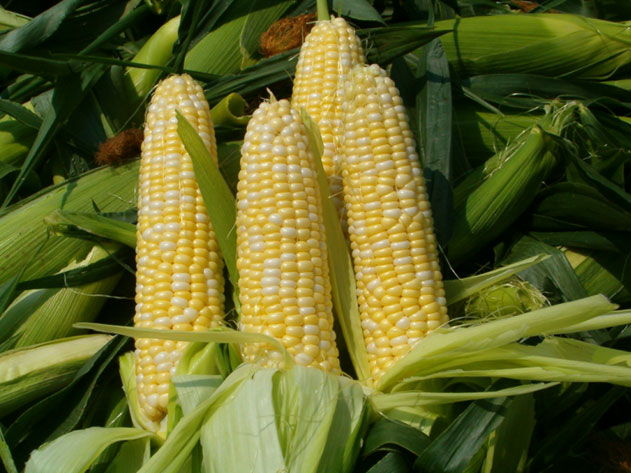 As the scrutiny of Glyphosate grows in the United States, a U.S. Government Accountability Office report has criticized the Food and Drug Administration (FDA) for not sufficiently monitoring residues of the chemical on foods. This February, the FDA announced testing of Glyphosate in foods including soybeans, corn, milk, and eggs. Meanwhile, consumer groups, academics and testing laboratories have claimed to have detected Glyphosate in breast milk, honey, cereal, wheat flour, soy sauce, and infant formula as well.
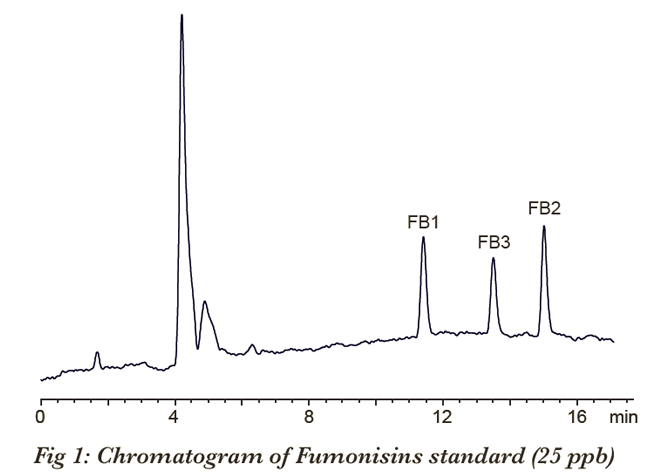 Analysis of Mycotoxins is an important part of food and feed safety. As regulations tighten laboratories all around the world expand their testing capabilities to include analysis for different types of toxic fungi metabolites. Pickering Laboratories has a diverse line of products designed for Mycotoxins analysis, including Pinnacle PCX post-column derivatization system, UVE photochemical reactor and immumoaffinity columns. We also developed several methods for single families of Mycotoxins as well as multi-residue protocols.