
Dear Valued Customer,
We continue to receive almost-daily inquiries from customers for new types of Product Testing Solutions, resulting in both proprietary and open market formulations being created. As our product line expands, we will be reaching out to you via our Newsletter for periodic product updates and announcements. You can also check our PTS website for up-to-date product information.
–
CORROSION TESTING FOR METALLIC MATERIAL IN DENTAL DEVICES
This Artificial Saliva is formulated according to ISO 10271-2011 standard procedure. ISO 10271-2011 specifies the method for corrosion testing for metallic material in dental devices. The solution should be stored in the refrigerator and has a 1-year shelf life. The pH of the solution is 2.3.
1700-0313 Artificial Saliva, ISO 10271-2011, Not Stabilized, each (200 mL/bottle)
MODIFIED SALIVA FOR TESTING PRODUCTS FOR CORROSION, COLORFASTNESS AND DISCOLORATION
This ready-to-use solution closely resembles the mineral composition of natural saliva and can be used for testing a wide variety of products, including dental metal alloys. The modified formulation has added Potassium Thiocyanate to achieve better stability at higher pH and make it more similar to human saliva This product is manufactured to customer-requested pH and it can be stored at room temperature.
1700-0314 Artificial Saliva, Modified Fusayama/Mayer, Custom pH (up to 6.5), Stabilized, each (200 mL/bottle)
CORROSION RESISTANCE FOR GOLD ALLOY, NEW BUFFERED FORMULATION
This formulation is used to determine corrosion (tarnishing, oxidation and surface penetration) resistance for gold alloy coverings on watch cases and accessories, including bracelets when they are permanently attached to the case. The solution is at pH 4.7 per ISO 3160 specifications and buffered for long-term pH stability.
1700-0537 Artificial Perspiration, ISO 3160 with added Pyruvic acid, buffered, Stabilized, each (200 mL/bottle) (minimum order quantity of 2 bottles)
SWEAT-SEBUM EMULSION, NEW LARGER FORMAT
Inspired by the ASTM D4265-98 method for staining, Eccrine Perspiration is emulsified with Artificial Sebum. Prepared without dust/dirt for a more universal application, this emulsion mimics non-exercise induced skin surface film liquids (SSFL). As SSFL, it can be used to test any topical use product or to test the stability of any article that will come in contact with human sweat. This product requires refrigeration to remain in solution and prevent rancidity.
1700-0549 Artificial Eccrine Sweat-Sebum Emulsion each (950 mL)
ASTM D2322-00 ARTIFICIAL PERSPIRATION
This solution is made according to ASTM D2322-00 and is used to test the resistance of shoe upper leather against perspiration. The pH of the solution is 7.5 and it is stable at room temperature.
1700-0550 Artificial Perspiration, ASTM D2322-00, Stabilized, each (200mL/bottle)
URINE FOR TESTING STERILE URETHRAL CATHETERS, NEW LARGER FORMAT
Artificial Urine is prepared according to the DIN EN 1616:1999 standard procedure. DIN EN 1616 specifies the method used to test sterile urethral catheters. This ready-to-use solution should be stored frozen to avoid bacteria growth. The pH of the solution is 6.6. 1700-0603 Artificial Urine, DIN EN 1616-1999, Not Stabilized, 19.8L
SUBSTITUTE OCEAN WATER
Substitute ocean water is prepared according to official ASTM method D1141-98. This product can be successfully used in a wide variety of tests where solutions simulating sea water are required, such as oil contamination testing, detergent evaluation and corrosion testing. The pH of the solution is 8.2 and it is ready-to-use. Product is stored at room temperature. Please inquire about different sizes.
1700-0804 Synthetic Hard Water, custom hardness, ASTM E1945-02, each (200 mL/bottle)
Contact Pickering Laboratories’ Technical Support team at support@pickeringlabs.com with any questions or comments.
Best regards,
David Mazawa
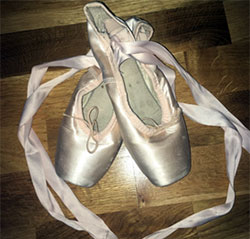 At Pickering Laboratories, we are always excited to support young scientists as they explore their interests. Let us introduce Abby Loney from Moorhead, Minnesota. Abby’s science fair project idea was to investigate the durability of ballet pointe shoes and to see if some non-traditional materials could provide increased longevity.
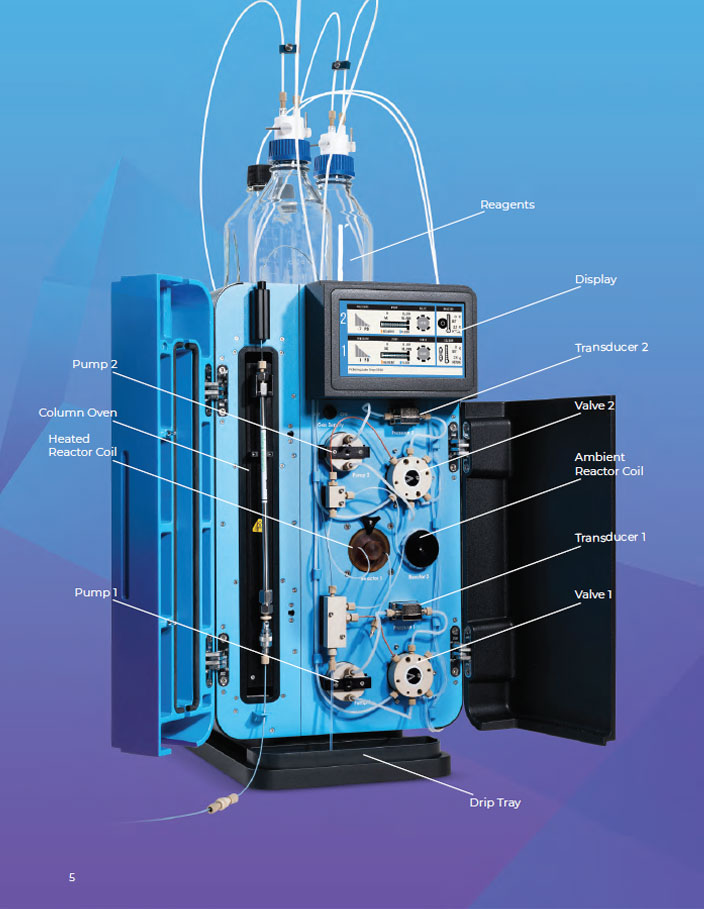
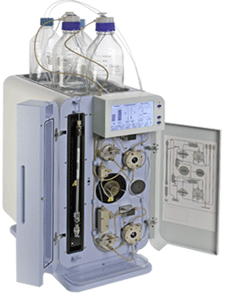
 Next generation post-column derivatization instrument delivers on promise of “Guaranteed Chemistry”