Category Archives: Uncategorized

34th America’s Cup

By Wendy Rasmussen

OTUSA and ETNZ

Before the America’s Cup came to San Francisco, I never paid much attention to the event. It doesn’t get much press here in the US, and being a native of a land-locked state, sailing was not something I grew up with.

But after living in San Francisco for many years, I learned to sail and gradually my awareness of the America’s Cup increased, and I gained an appreciation of the event and the hard work that goes into designing and sailing the boats.The Cup

Those who wish to race for the cup become Challengers.  If multiple teams are challenging, they must duel it out to decide who will then face the Defender in the America’s Cup Finals.  This series of races became known as the Luis Vuitton Cup. From the America’s Cup Website:

In 1970, more than one yacht club interested in challenging for the America’s Cup, so for the first time, a competition was staged to determine the single Challenger that would face the Defender, the New York Yacht Club.

The French malletier Louis Vuitton became involved with the America’s Cup in 1983, supporting the Challenger Selection Series that came to be known as the Louis Vuitton Cup. The idea was twofold; to develop and identify the strongest possible challenger for the America’s Cup and ensure that they were sufficiently battle-tested through tough competition to beat the Defender.

(Be sure to check out www.americascup.com for information, videos, history, race results and more).

This year, Emirates Team New Zealand (ETNZ) ETNZ low reswon the Luis Vuitton Cup to become the Challenger, sailing against the Defender, Oracle Team USA (OTUSA).

Living in San Francisco, I had the wonderful opportunity to watch several of the races, to meet many of the sailors, and to watch the teams ready themselves for the “big day”. The teams were in town for several months before the regattas to practice. The AC72s were (are) an amazing site to see, both from land and from the water.OTUSA They are truly a sight to behold, especially when foiling at speeds of up to 45kts*

The 34th America’s Cup finals proved to be the longest in history due to several postponements due to wind conditions.  In fact, the official end date for the regatta was September 21; the final race was on September 25th. But perhaps the most amazing feat of this regatta was the comeback made by OTUSA:

In order to win the Cup, a team must earn nine points. Ordinarily, this would mean winning 9 races (1pt per win). But before the regatta began, Oracle were penalized two points due to an infraction in an earlier series. And so while ETNZ needed to win 9 races, OTUSA had to 11. 

The comeback began on Sept 19, 2013. ETNZ were ONE race away from winning the Cup. OTUSA still need to win EIGHT.  For days on end, we all said, “Well, this is it. Kiwi’s are going to take home the cup.” But then OTUSA continuously surprised us all. In the end, they won an unprecedented EIGHT RACES IN A ROW! in order to come back and win the regatta. Click here for the Results.

I won’t speculate here as to why OTUSA made such an amazing comeback, or why ETNZ lost in the end. I will only say that it was so exiting to be a part of that historic moment, in an amazing city with an amazing natural venue for watching the races. And most importantly for me, the members of both teams handled themselves with an incredible amount of dignity and sportsmanship. The members of both teams were all under an incredible amount of pressure, and yet they still managed to greet and sign a few autographs for their fans  — yes, this fan included.

*45kts = 51.8mph. By comparison, our sailboat at it’s fastest will do about 12kts, or 13.8mph

NEMC 2013

Pickering Laboratories participated in the National Environmental Monitoring Conference in San Antonio, Texas from August 4-8.

niosita low res
Old San Antonio

Rebecca and Wendy were on-hand to share Pickering’s products with the environmental laboratories involved with the conference.  On display were the new FREESTYLE sample clean-up system and the Pinnacle PCX.

Some highlights of the conference included a new product by InnovaPrep, which will rapidly concentrate pathogens in liquid samples, and the 2-D GCMS analysis of POPs in human milk. There were also several interesting discussions about pesticide extraction and analysis as well as the use of Hydrogen as a carrier gas in GC (instead of Helium, for which there is currently a shortage).

The meeting was held at the Hyatt in downtown San Antonio on the Riverwalk. This area of town is full of history and interesting architecture. We were also located directly across the plaza from the Alamo.

alamo low res
Remember the Alamo

2013 Pickering Laboratories North American Catalog

Our latest Catalog for North America is now available!

Click on the link to download the latest product Catalog from Pickering Laboratories, Inc.

Pickering Catalog: http://pickeringlabs-retentiontimes.com/wp-content/uploads/2013/08/2013_PickeringLabs_Catalog_NorthAmerica_LowRes.pdf

Inside our catalog you will find a complete product listing for all instruments and consumables we currently have available. From Sample Cleanup to Post-Column Derivatization, to artificial Perspiration and Saliva, we hope you find something you will find useful!

Iodine Clock

As part of our new blogging format, we’d like to share a video with you.
We have a new favorite YouTube channel:  It’s the Periodic Table of Videos, and it’s produced by the University of Nottingham in the UK and features The Prof. We hope you enjoy this, and their other videos about general chemistry:

Iodine Clock

If only all chemistry classes could be so much fun…


NEW Amino Acid method: Oxidized Feeds in 30 minutes

Dear Valued Customer,
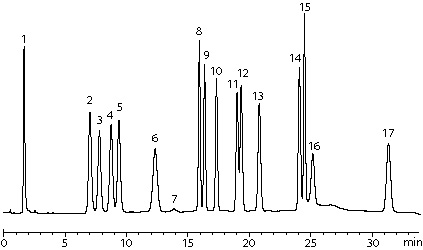
We are pleased to announce the new 30 minutes Oxidized Feed method. This method uses the new fast sodium column 1154110T and utilizes the column temperature gradient with the Pinnacle PCX. Because this method uses a column temperature gradient, it is important to note that the method is not compatible for Vector or PCX5200 users.


Peak Identification
1. Cysteic Acid
2. Methionine Sulfone
3. Aspartic Acid
4. Threonine
5. Serine
6. Glutamic Acid
7. Proline
8. Glycine
9. Alanine
10. Valine
11. Isoleucine
12. Leucine
13. Phenylalanine
14. Lysine
15. Histidine
16. Ammonia
17. Arginine

Kits are available and include the following:

0352-0020 30 minute Oxidized Feed Kit – T100C
1154110T Qty 1 Column, Fast Sodium 4.6x110mm (includes 1700-070 Test Mix)
1700-3102 Qty 1 Kit, GARD Holder and 2 Cation GARD
1700-0155 Qty 1 Cal Standard, Feed Hydrolysate
Na220 Qty 1 Sodium Diluent, pH 2.20 4x250mL
Na270 Qty 1 Sodium Eluent, pH 2.80 4x950mL
Na740 Qty 1 Sodium Eluent, pH 7.40 4x950mL
RG011 Qty 1 Sodium Column Regenerant 4x950mL
T100C Qty 1 TRIONE, Ninhydrin Reagent 4x950mL

0352-0021 30 minute Oxidized Feed Kit – T200
1154110T Qty 1 Column, Fast Sodium 4.6x110mm (includes 1700-070 Test Mix)
1700-3102 Qty 1 Kit, GARD Holder and 2 Cation GARD
1700-0155 Qty 1 Cal Standard, Feed Hydrolysate
Na220 Qty 1 Sodium Diluent, pH 2.20 4x250mL
Na270 Qty 1 Sodium Eluent, pH 2.80 4x950mL
Na740 Qty 1 Sodium Eluent, pH 7.40 4x950mL
RG011 Qty 1 Sodium Column Regenerant 4x950mL
T200 Qty 1 TRIONE, Ninhydrin Reagent 2 part

0352-0022 30 minute Oxidized Feed Kit – O120
1154110T Qty 1 Column, Fast Sodium 4.6x110mm (includes 1700-070 Test Mix)
1700-3102 Qty 1 Kit, GARD Holder and 2 Cation GARD
1700-0155 Qty 1 Cal Standard, Feed Hydrolysate
Na220 Qty 1 Sodium Diluent, pH 2.20 4x250mL
Na270 Qty 1 Sodium Eluent, pH 2.80 4x950mL
Na740 Qty 1 Sodium Eluent, pH 7.40 4x950mL
RG011 Qty 1 Sodium Column Regenerant 4x950mL
O120 Qty 1 OPA, 5g
OD104 Qty 1 OPA Diluent 4x950mL
3700-2000 Qty 2 Thiofluor, 10g

Sincerely,


David Mazawa

Technical Support Chemist
Pickering Laboratories, Inc.
1280 Space Park Way
Mountain View, California 94043 USA
Phone: 650-694-6700, ext. 710
Toll Free: 800-654-3330, ext. 710
http://pickeringlabs.blogspot.com/

Pickering Laboratories at the Florida Pesticide Residue Workshop

By Wendy Rasmussen

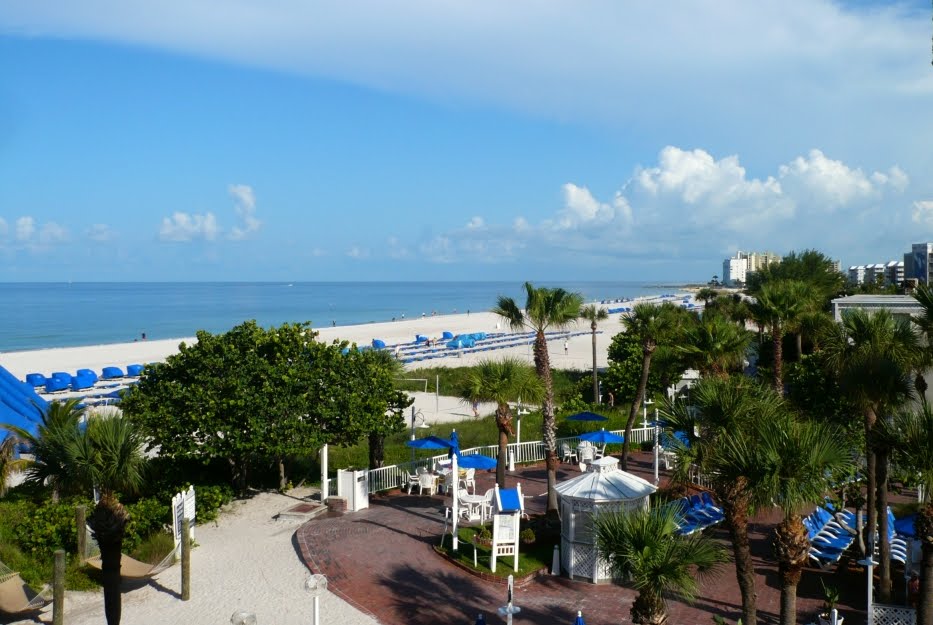
Last month we participated in the Florida Pesticide Residue Workshop, held in St. Pete’s Beach in Florida from July 18-21. It was a very interesting meeting from many aspects: talks, posters, mix of attendees and exhibitors, current topics. There were talks on mycotoxins and veterinary drugs as well as policy and risk assessment.

Pickering presented a Vendor breakfast session on Wednesday July 21, titled “Keys to an Analytical Method: Focus on Mycotoxins” We decided to highlight our Mycotoxin analysis product line which we are distributing from our German partners, LCTech GmbH
.

The weather was unusually cool for Florida in July, hovering in the mid-90s (35°C). The water temperature in the Gulf was surprisingly refreshing at “only” 89°F (32°C). The usual thunderstorms were present, although fewer in number. Mother Nature provided us with some very impressive lightning storms just off shore in the evenings.

The meeting was much larger this year, both in terms of attendance and exhibitors. Not only were there more attendees, but there was a very large number of First-time attendees, as well as a greater contingency of international attendees from Europe, Asia, Australia, and South America. There were 226 attendees and 25 exhibiting companies.


One of the hot topics of discussion at the meeting was the Deepwater Horizon spill in the Gulf. No oil
has reached that part of the Florida coast, and so the beaches were open, but inside there was much debate about the testing of the seafood for PAHs, the cleanup of the spill, and the environmental impact, both on marine human life. There was a great deal of discussion about using the NOAA method for PAHs (which involves GPC Cleanup), as well as testing for the alkyl homologs present in the oil and potential screening methods to speed up the analysis time.

GPC cleanup remains very effective at cleaning up fatty and complex matrices, and it’s still part of the official methods. GPC Quattro would be an excellent choice for this. With 4 individual channels, each with their own pump and lines, and with rugged, easily repackable columns, a lab would get 4 times the productivity of a single column system: GPC Quattro

Links for info on the Gulf:
There is an abundance of websites, news, and general information about the oil spill. Here are a few links I found to be interesting:

The FDA has approved an HPLC-FLD screening method for the PAHs, which will still need confirmatory testing, but this will decrease the initial testing time down from 4-5 days to 48hrs.
For FDA’s latest updates: http://www.fda.gov/Food/ucm210970.htm

It’s been proposed that we should be looking at Alkyl Homologs of PAHs. Ed Overton gives a pretty good overview of these compounds and the composition of oil spills in general: Overton perspective

Restek recently analyzed some of the oil via GCxGC-TOFMS: ChromaBLOGraphy

(This is not meant to be a comprehensive list, nor is there any endorsement intended or implied)

Please Re-submit Your Answers to Amino Acid Quiz (No. 2)

Due to an unfortunate set of circumstances, all submitted answers to the previous Chromatography Quiz on Amino Acid Analysis have been lost. We sincerely apologize for the inconvenience to everyone who submitted an answer, and ask for all entries to be resubmitted. As we genuinely regret our technical difficulties, Rebecca will be sending prizes to all submissions, and grand prizes to everyone with the correct answer. Please resend your email, or resubmit your answer to rlsmith@pickeringlabs.com. Rebecca will send you confirmation via email that she has received your submission. All entries will be reviewed on June 11th, and prizes will be sent at that time. You can review the quiz at: http://pickeringlabs.blogspot.com/2010/01/chromatography-quiz-no-2.html. Again, our apologies, and if you have any questions please contact Wendy or Rebecca at 650-694-6700.